Material Stories: Wood, Stone & Light at Fjellsangin
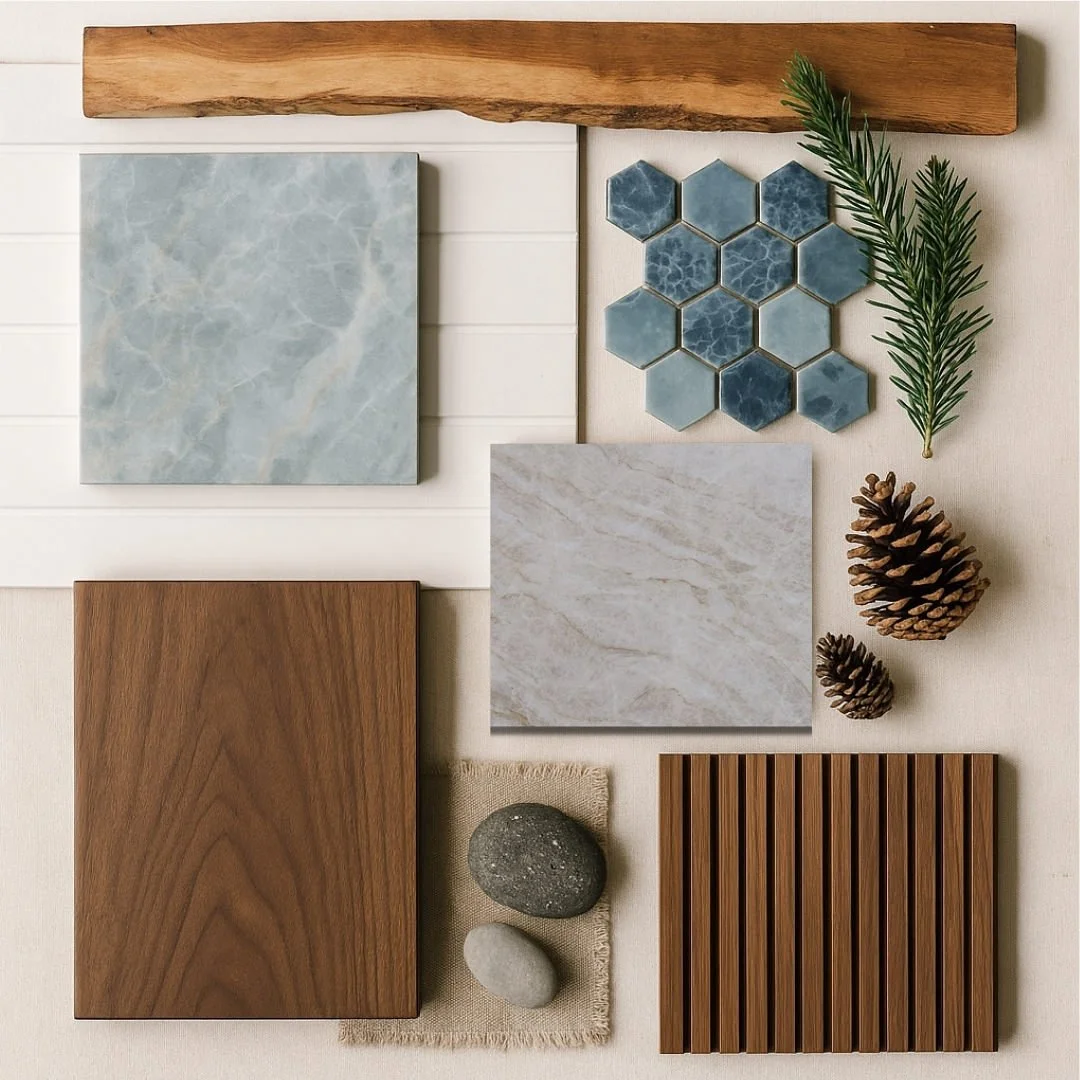
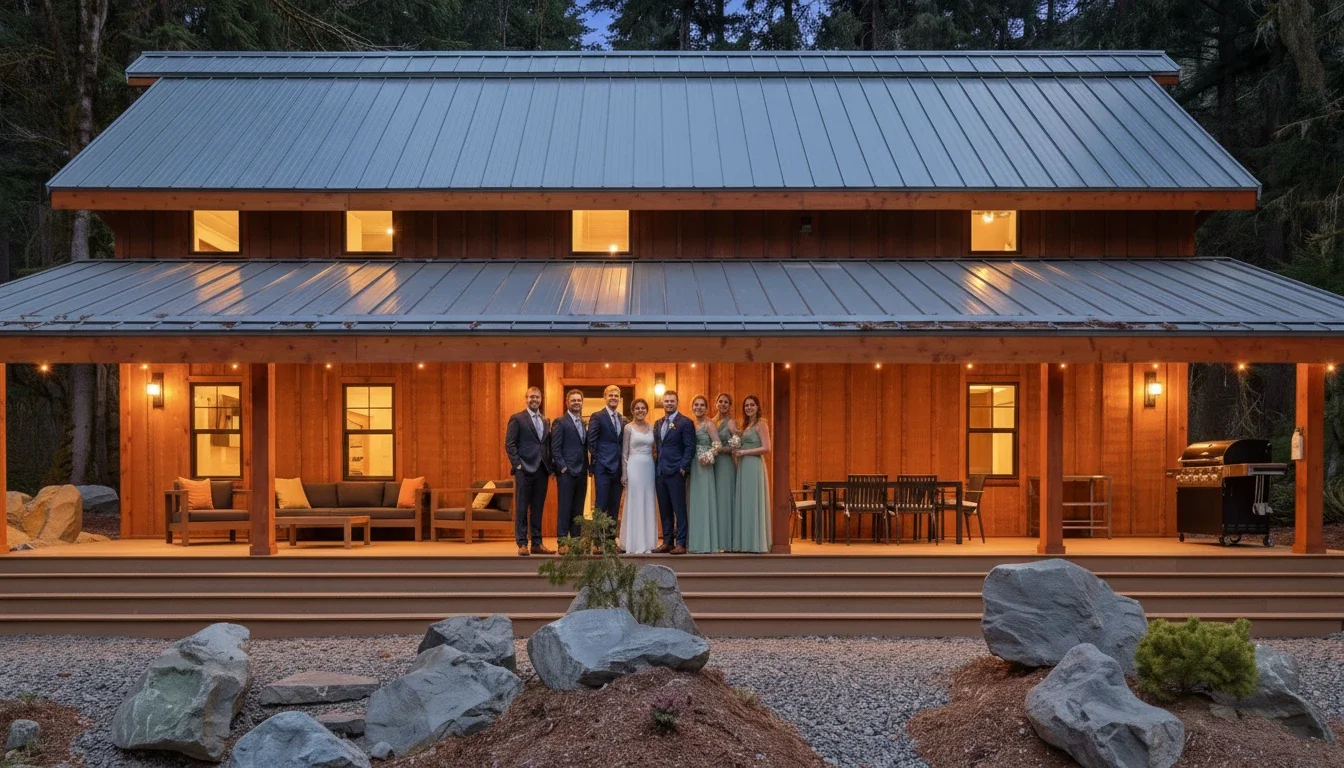
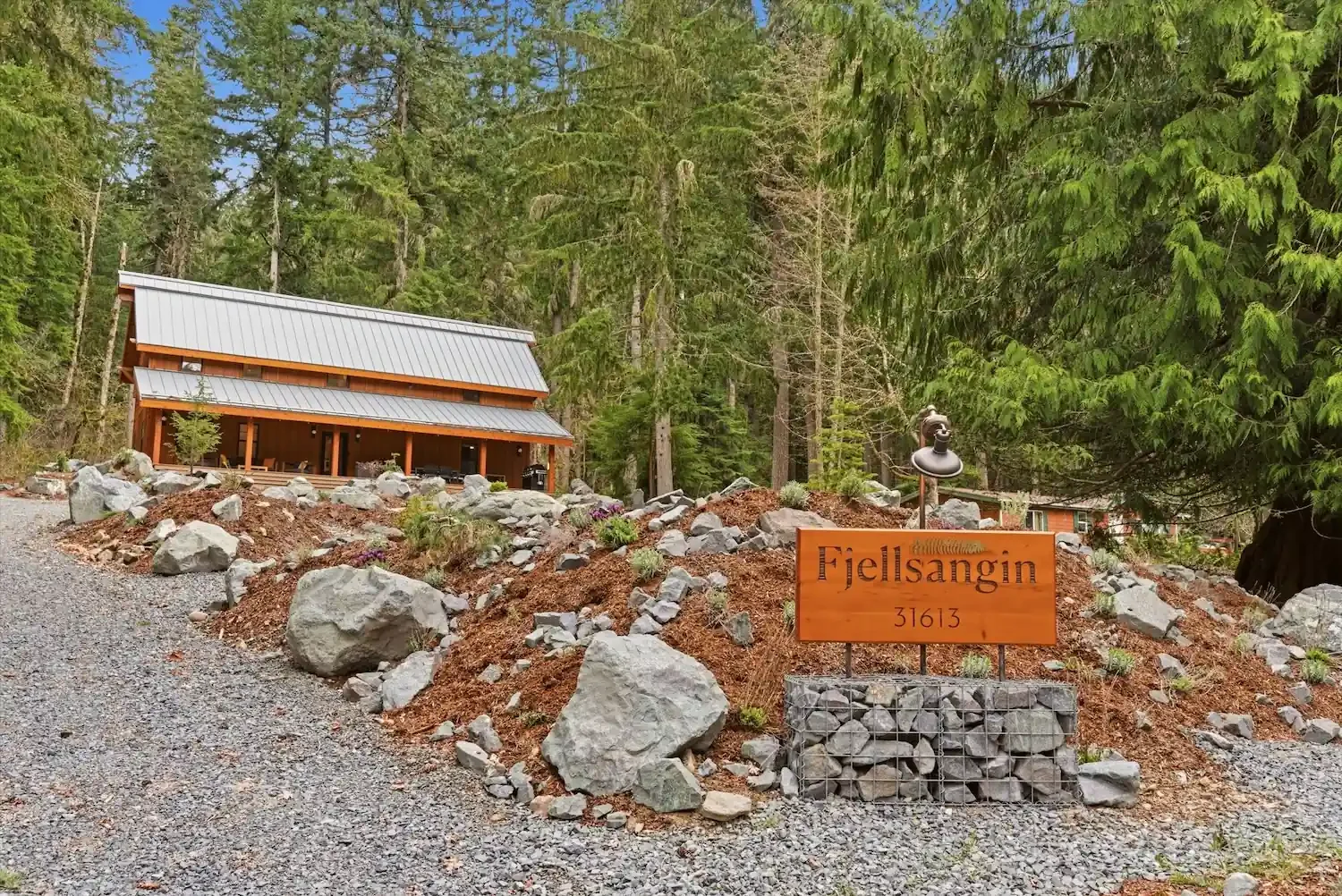
Every material at Fjellsangin was chosen for how it connects the cabin to the land surrounding it. Not for trend, not for catalog appeal — for how it feels under your hands, how it responds to light, and whether it could have come from anywhere other than the Pacific Northwest.
The answer is no. Everything here is rooted.
Live-Edge Alder: The Forest Framing Every View
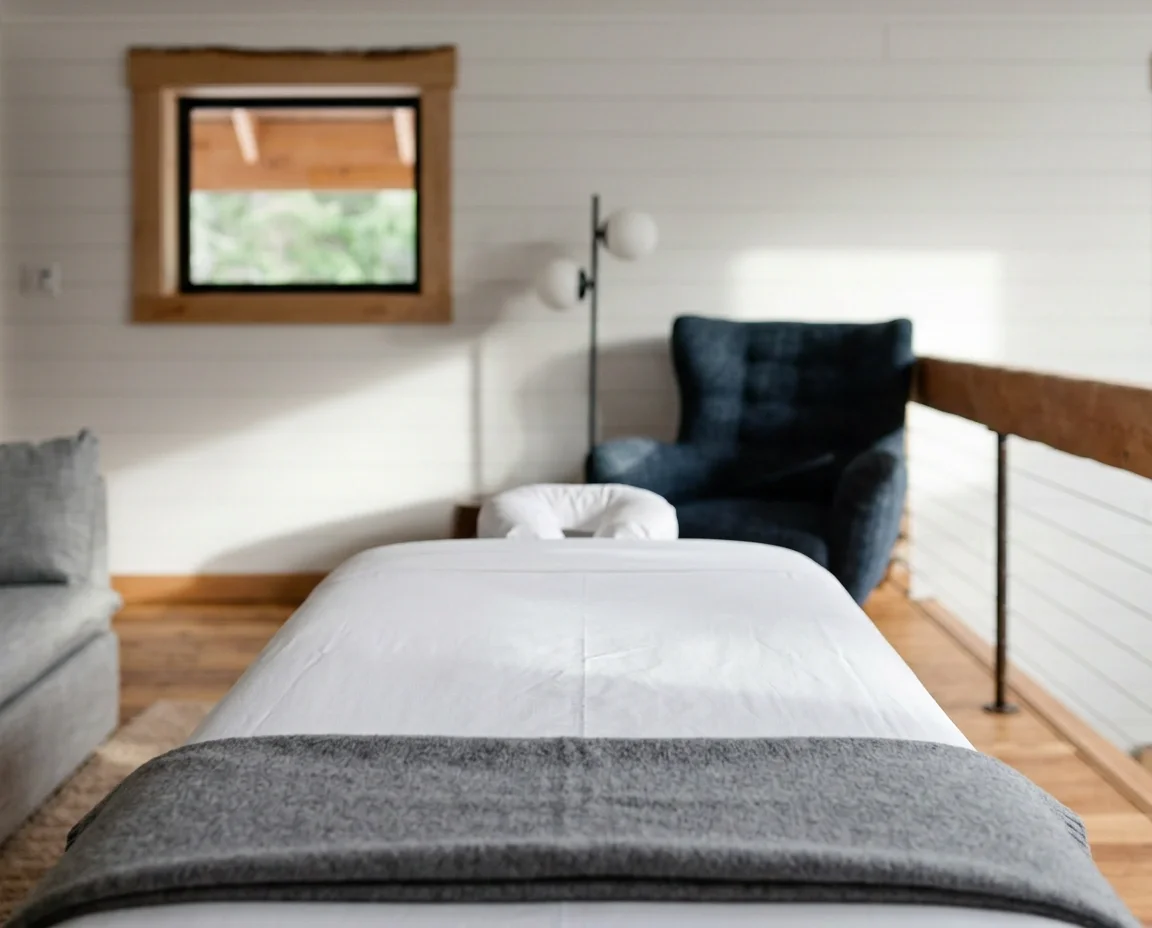
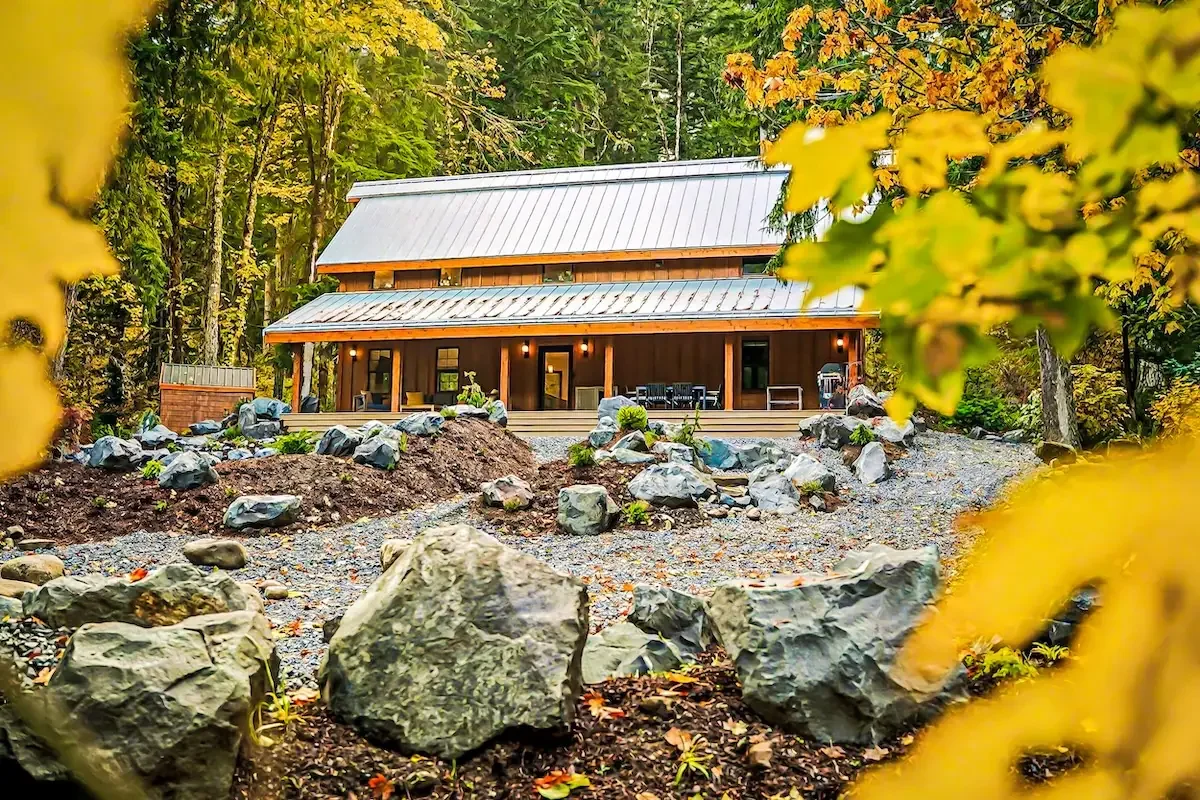
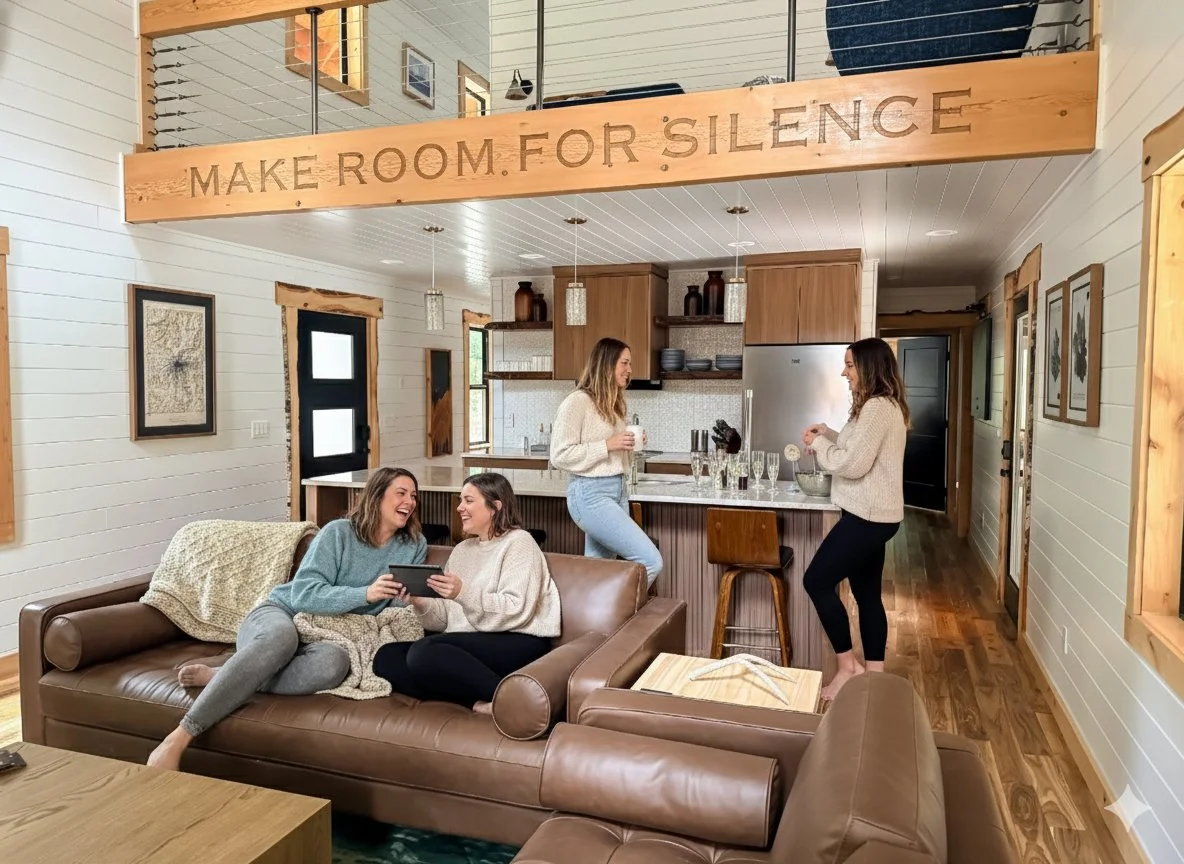
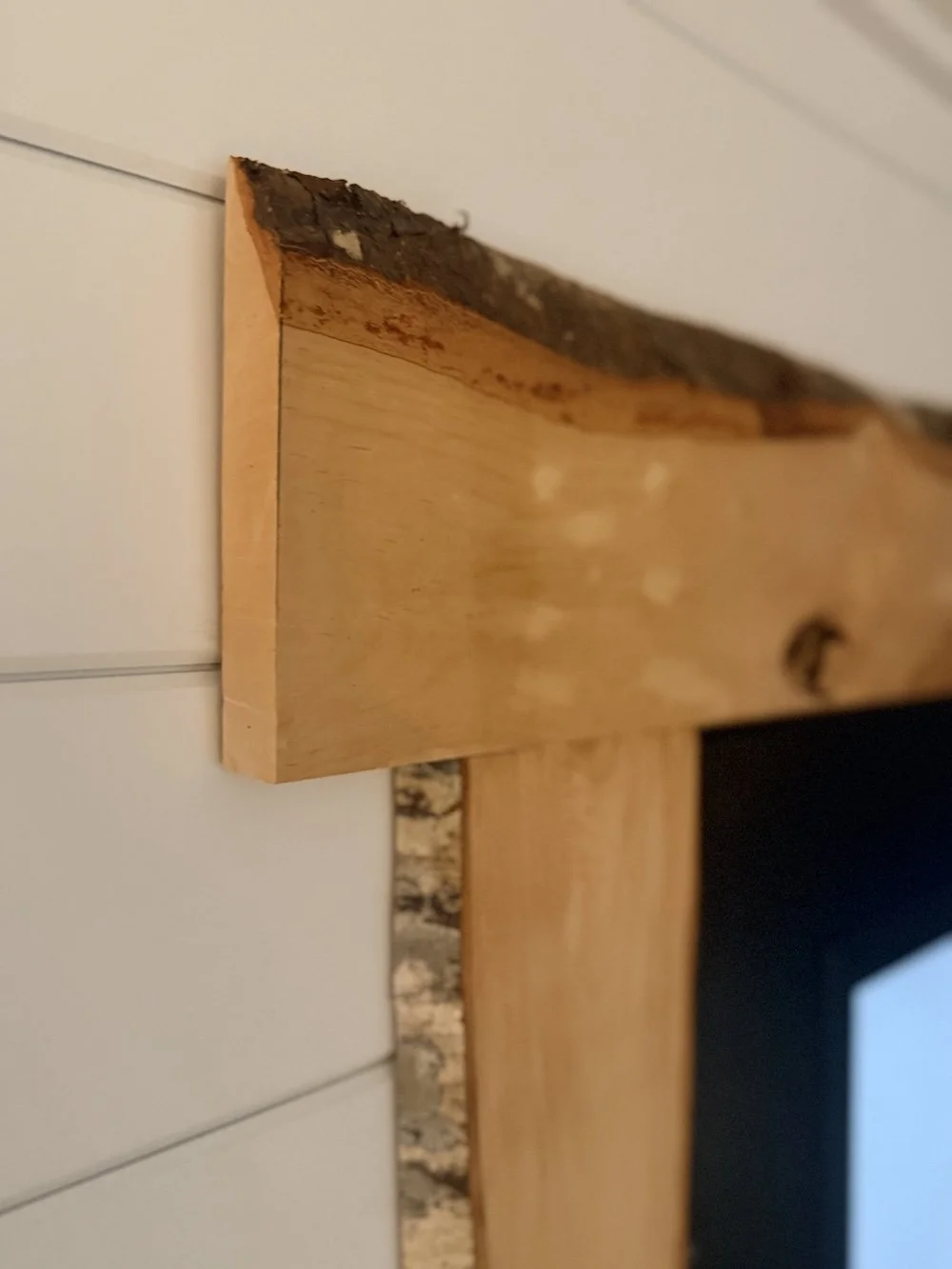
The windows and doors at Fjellsangin aren’t framed with standard trim. They’re lined with live-edge alder, milled locally — each piece shaped by the specific grain and character of the tree it came from. Lee milled it on-site — the alder came from just down the road near the park, so it traveled almost no distance and carries the grain and character of this specific corridor of forest: the knots, the soft warm grain, the organic curves that no manufactured product replicates.
Each opening becomes a frame within a frame. The forest outside, outlined by a piece of forest that’s been brought inside. Guests notice it right away and remark on it — which makes sense, because it’s one of the first things you see when you walk through the door.
Cedar: The Hot Tub Pavilion and the Sauna
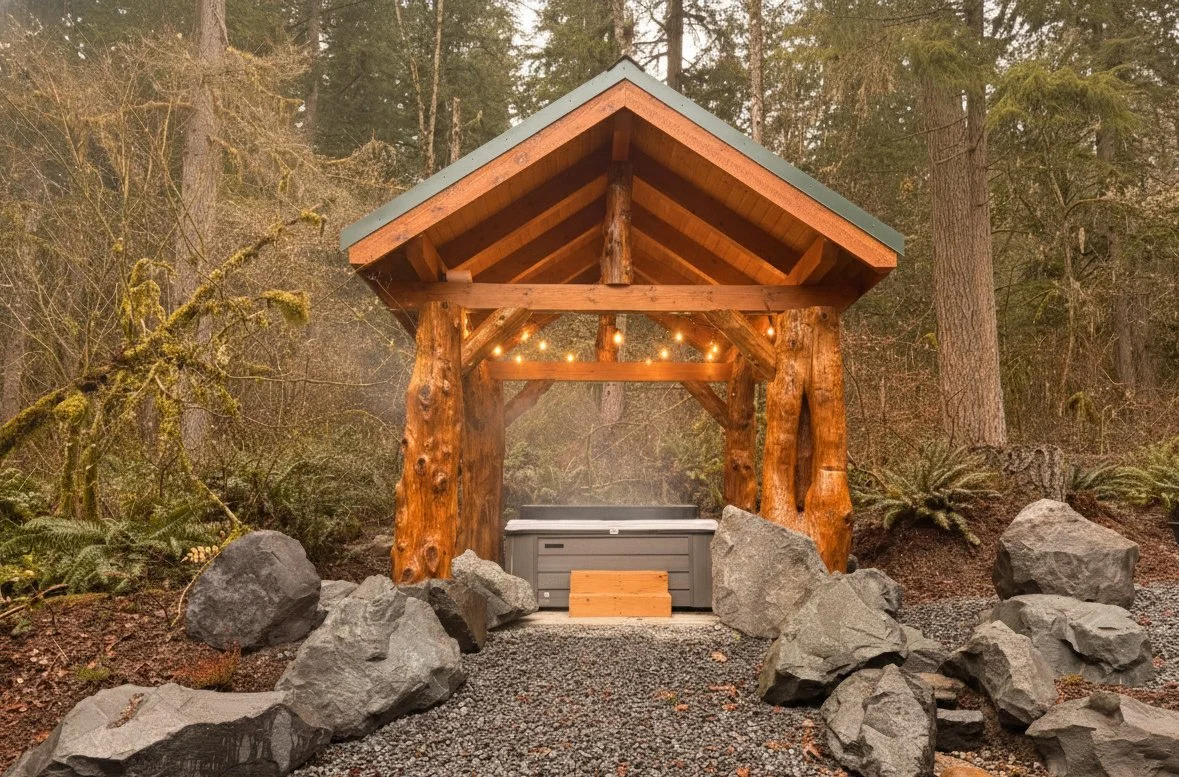
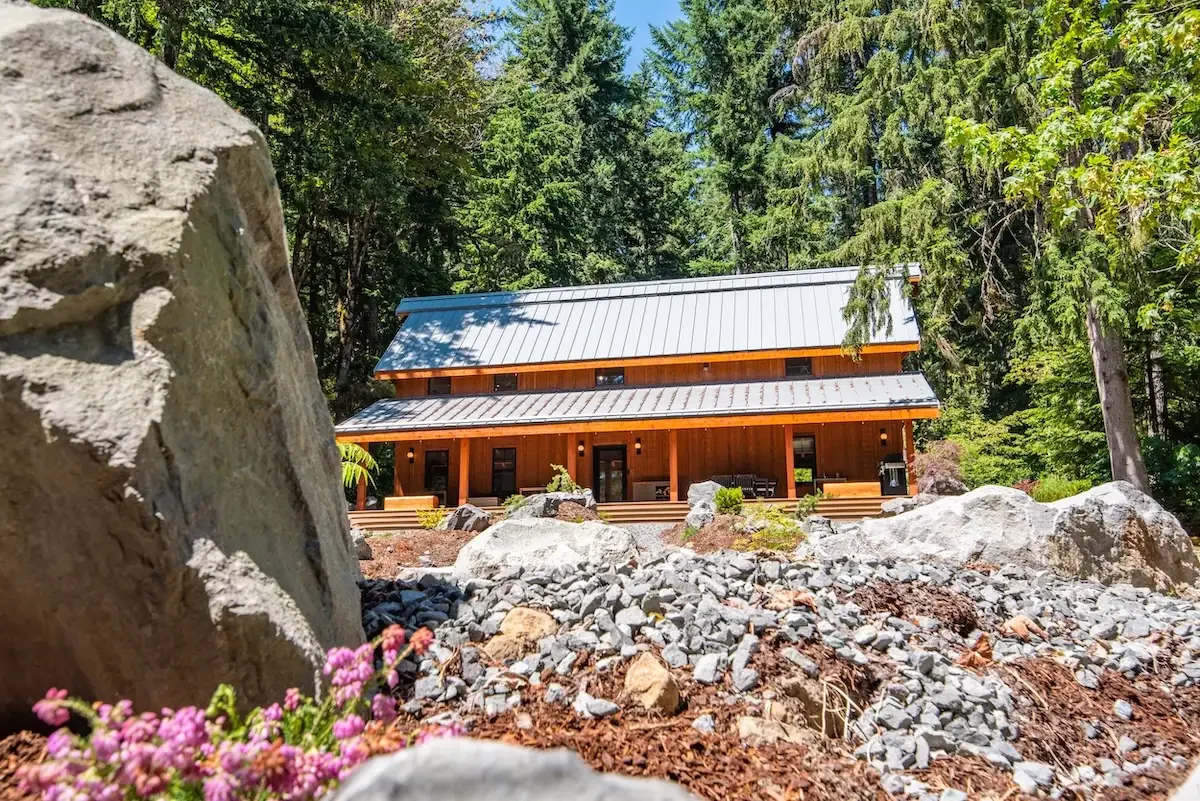
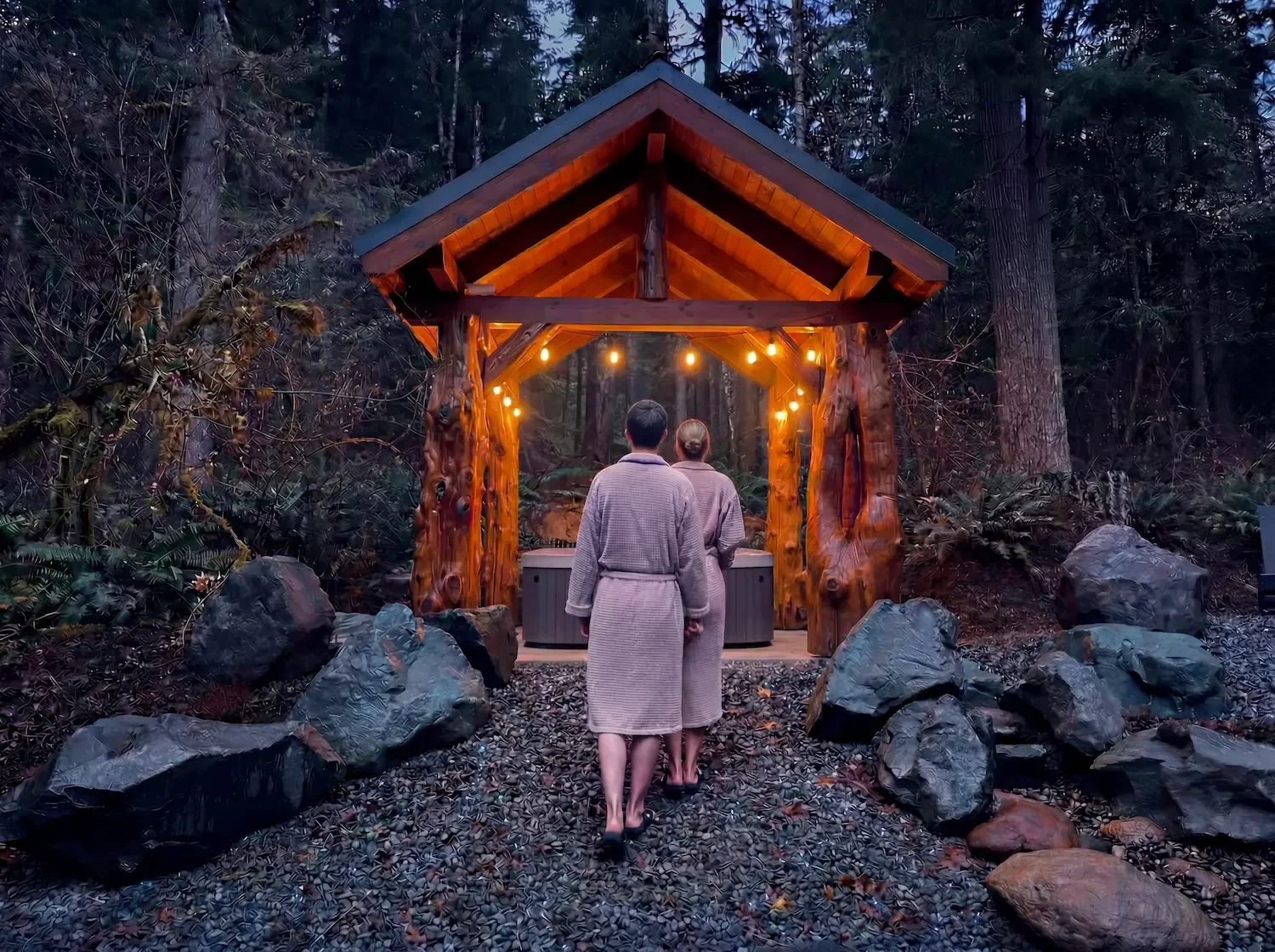
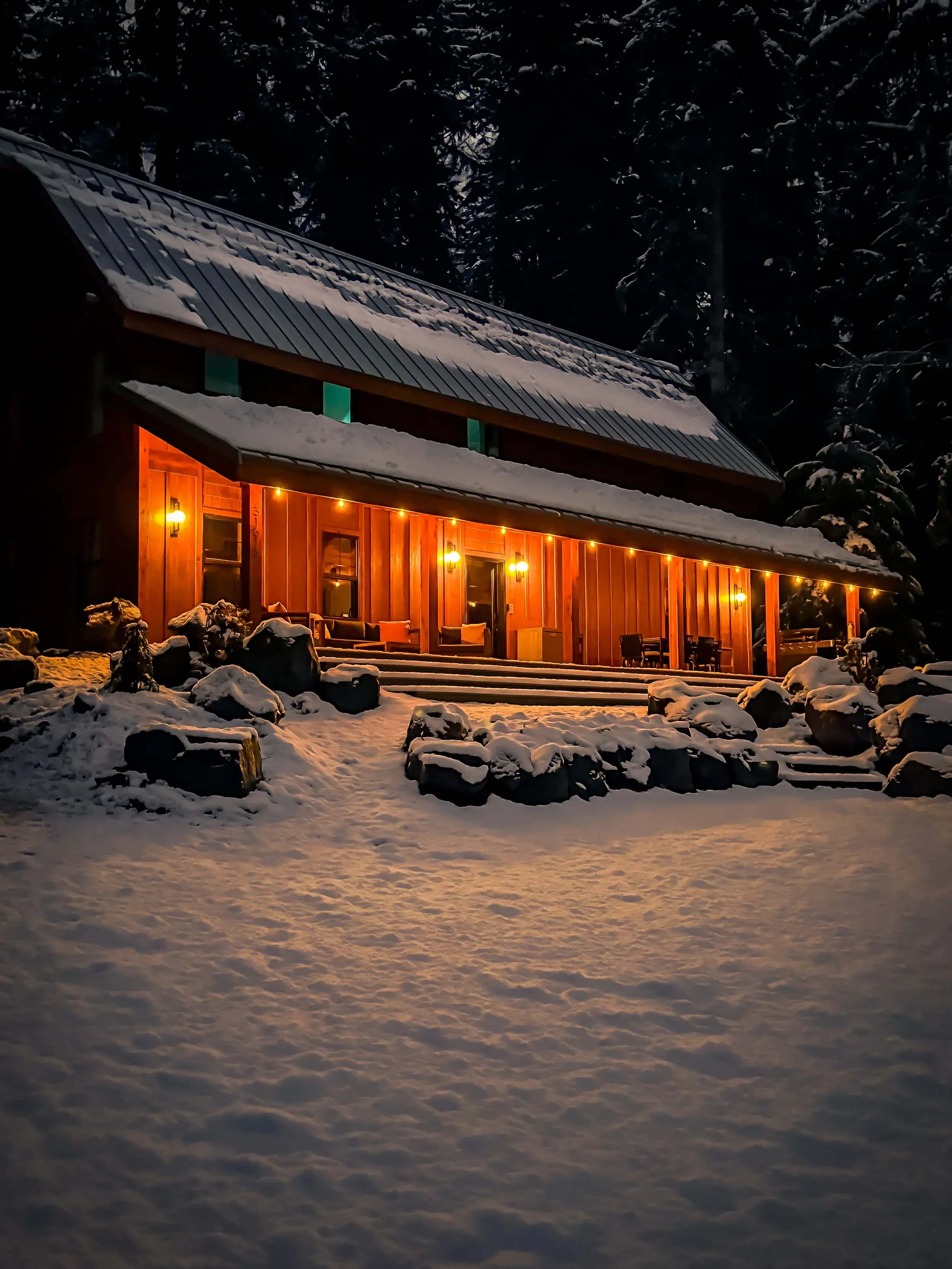
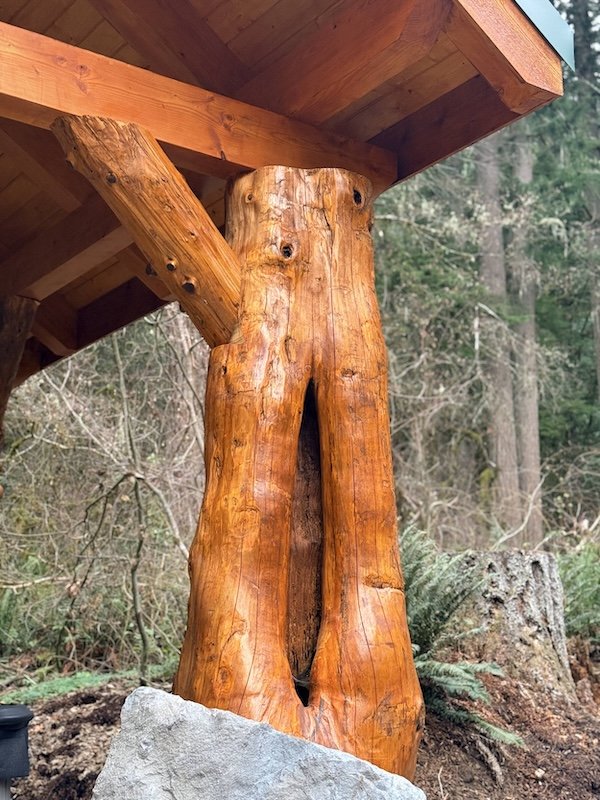
The hot tub pavilion was built with trunk-scale cedar log posts Lee sourced and positioned. His idea was to use posts large enough that the structure looks like it’s rising out of the forest rather than sitting on top of it — I was skeptical at first, thought they were too big, but he was right. Cedar weathers well, goes silver at the edges over time, and perfumes the air as it warms in the afternoon sun. The pavilion — with its twinkle lights and JBL speaker tucked into the corner — has the cedar aroma built in.
The cedar-lined sauna started as a kit, but Lee put his own mark on it: live-edge cedar trim throughout, and the side facing the road finished in leftover Woodtone siding from the house, so it ties into the exterior rather than reading as a separate structure.
Live-Edge Maple: The Kitchen Shelves
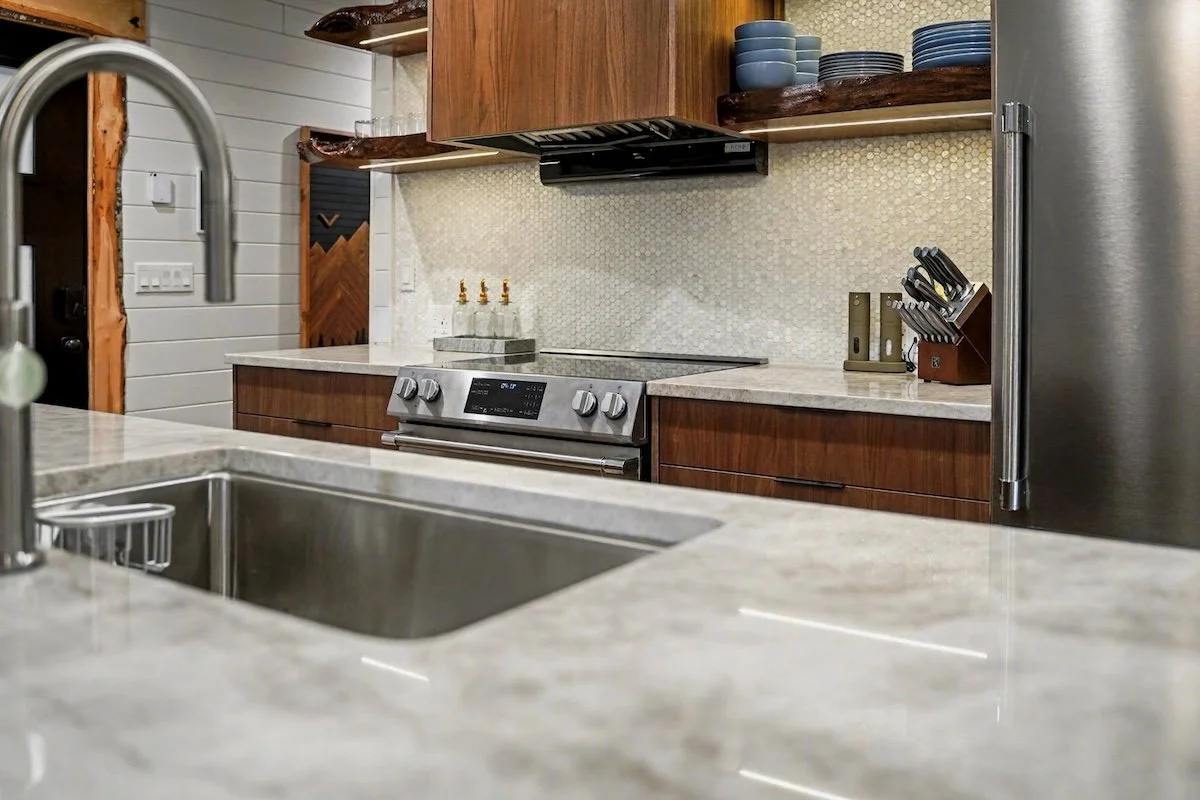
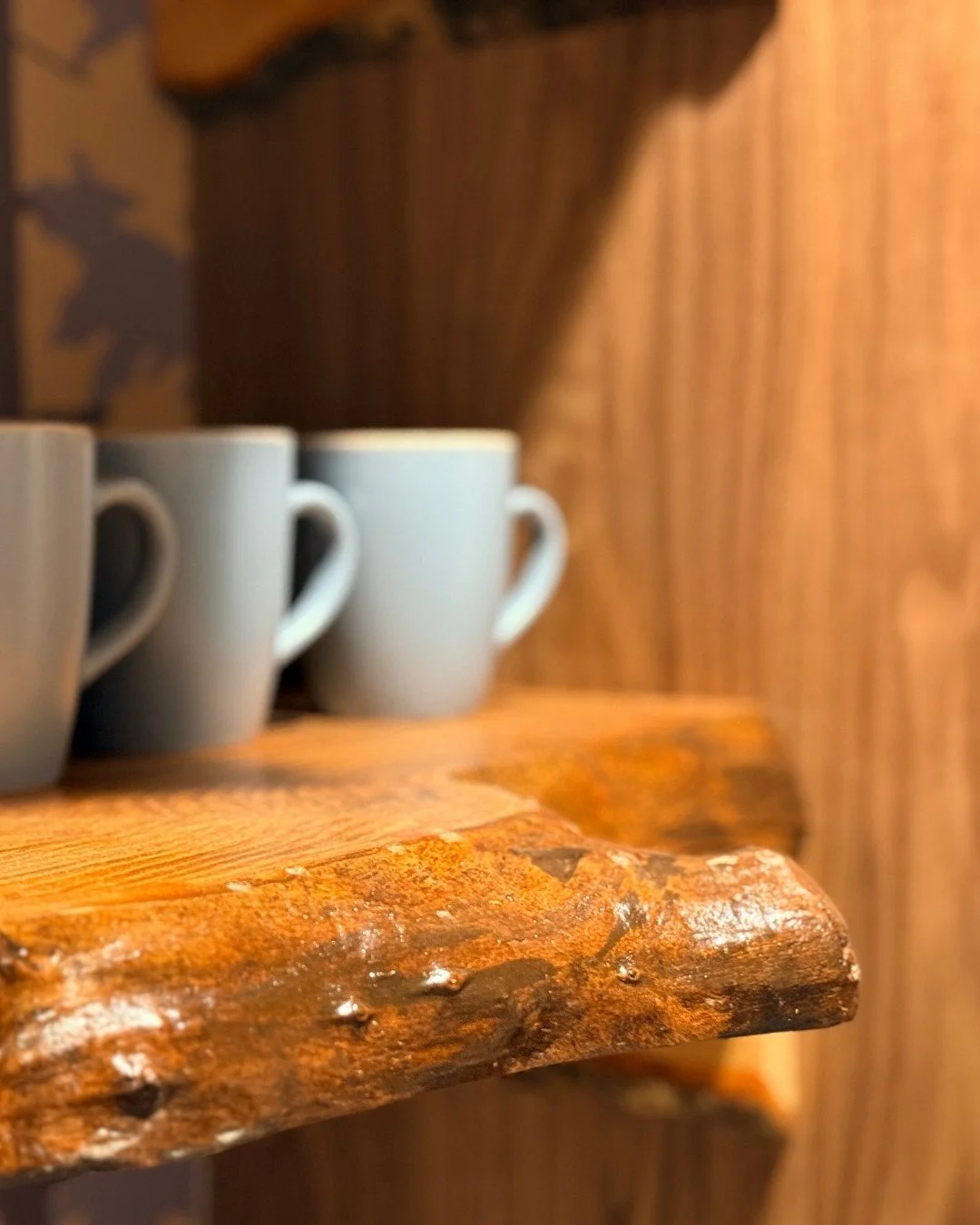
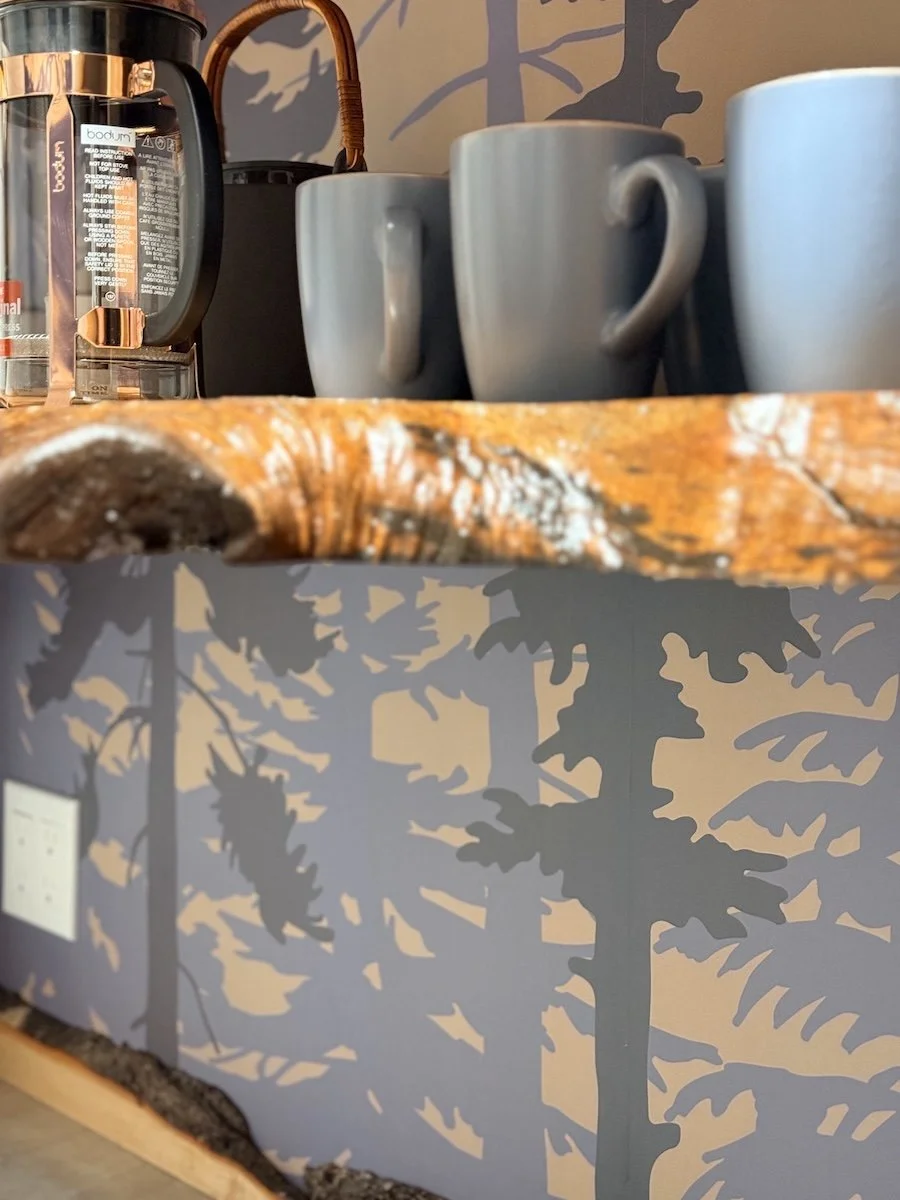
The open shelving in the kitchen and coffee bar is live-edge maple, shaped to keep the organic curvature of the tree. The live edge introduces movement into a kitchen that otherwise runs clean and geometric — walnut cabinetry, Taj Mahal quartzite countertops, the mother-of-pearl coin backsplash. The maple gives it breath.
The Taj Mahal quartzite is one of those surfaces that earns its name. It shifts from cool silver in morning shadow to a warm blush at golden hour. It’s a dynamic surface in a static room, and it’s the first thing guests run their hands across when they walk into the kitchen. The full material palette is explored in our sustainable design post and the Designing Fjellsangin post.
Douglas Fir Stair Treads
The stair treads are Douglas fir, milled on-site by Lee from timber sourced just down the road from Fjellsangin. Most guests won't consciously identify the wood, but they'll feel it as solid, familiar, and right.
Walnut Cabinetry
The walnut cabinetry in the kitchen anchors the room. Its depth creates visual calm against the white v-groove panel walls that run throughout the great room and bedrooms, and its warm undertones bridge the lighter maple and alder with the darker stone. I’ve always loved walnut cabinets — this felt like the right place for them.
Taj Mahal Quartzite Counters
The Taj Mahal quartzite countertops were one of the biggest decisions in the build. The island is large enough that it needed an oversized slab, which broke the budget. It was still the right call. The stone reads differently depending on the light — cool and silvery in the morning, warmer by afternoon. It's a surface that rewards you for paying attention, which not everyone does right away.
White V-Groove Paneling
There's no drywall anywhere in the cabin. The white v-groove paneling runs through every room — great room, kitchen, bedrooms, all of it. It's the quiet canvas everything else reads against: reflecting winter light, brightening overcast mornings, giving the natural wood tones a surface to land on rather than compete with. Scandinavian in spirit, and it makes the whole cabin feel cohesive in a way that's hard to articulate until you've been in a space that doesn't have it.
The Coffee Bar Wallpaper
I designed the wallpaper in the coffee bar myself. The inspiration came from a design I saw at the Salish Lodge's lobby bar — bold forest silhouette, slate blue and warm sand. It stayed with me, and when it came time to design the coffee bar, I knew that was the direction. It's printed in Sweden. There's nothing else like it. It's one of the first things you see when you walk in, which is exactly what I wanted.
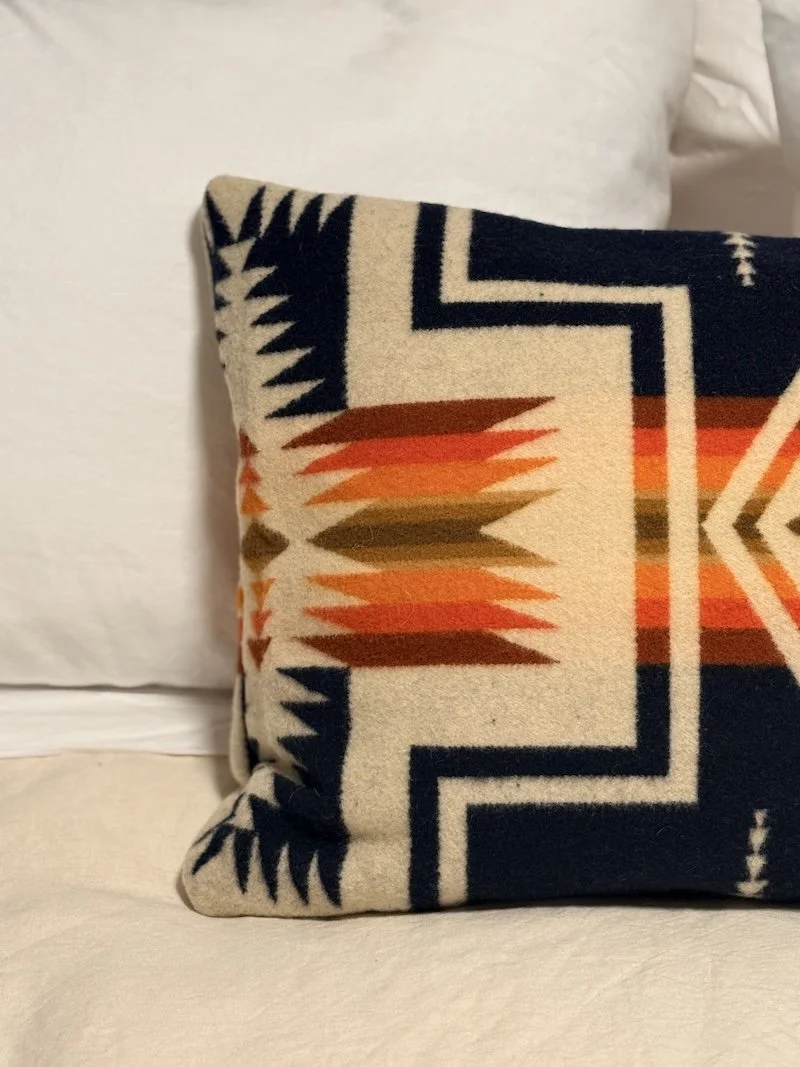
Pendleton Textiles
In the bedrooms, the bench and toss cushions are custom Pendleton — I cut up the blankets and sewed them myself. The earthy tones and iconic motifs bring pattern and color into rooms that are otherwise wood, stone, and white paneling. They ground the bedrooms in Pacific Northwest textile heritage without competing with anything around them. The kind of detail that takes a second to notice, and then you can’t unsee it.
Handknit Throws: Texture That Invites You In
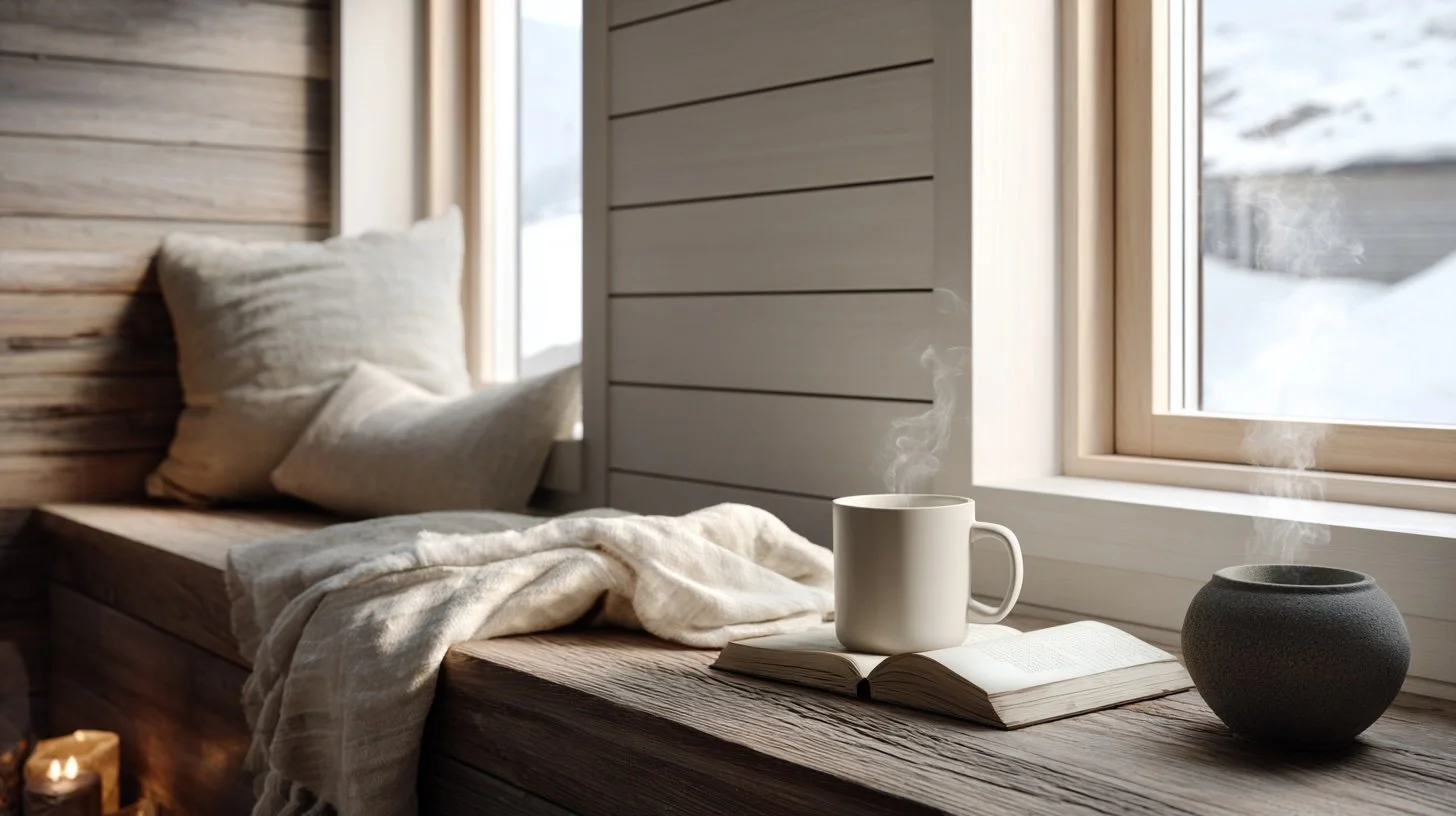
I knit the throws layered across the sofas and beds. Chunky, organic texture against the clean lines and smooth surfaces of the cabin. They're what you reach for first on a slow morning, or curling up in front of the fire.
The Art Pieces
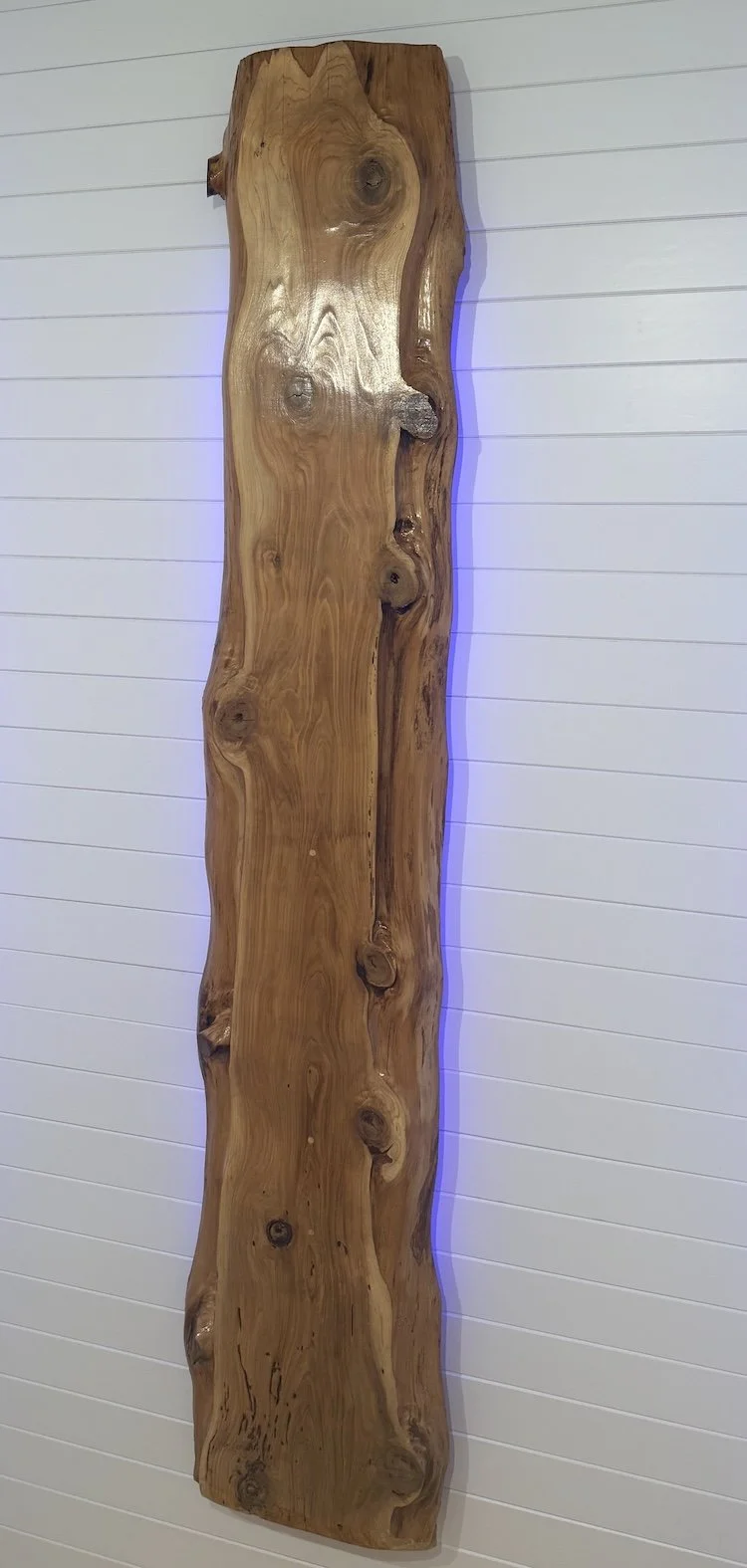
In the stairwell, a sculptural cedar slab Lee made rises vertically along the white paneling — locally sourced, live edge, the grain and knots visible. Tall and narrow, it has an almost geological quality, like a cross-section of forest set against the wall. The golden and amber tones are backlit with a soft blue-purple light, which makes them glow against the white v-groove in a way that stops you as you move through the space.
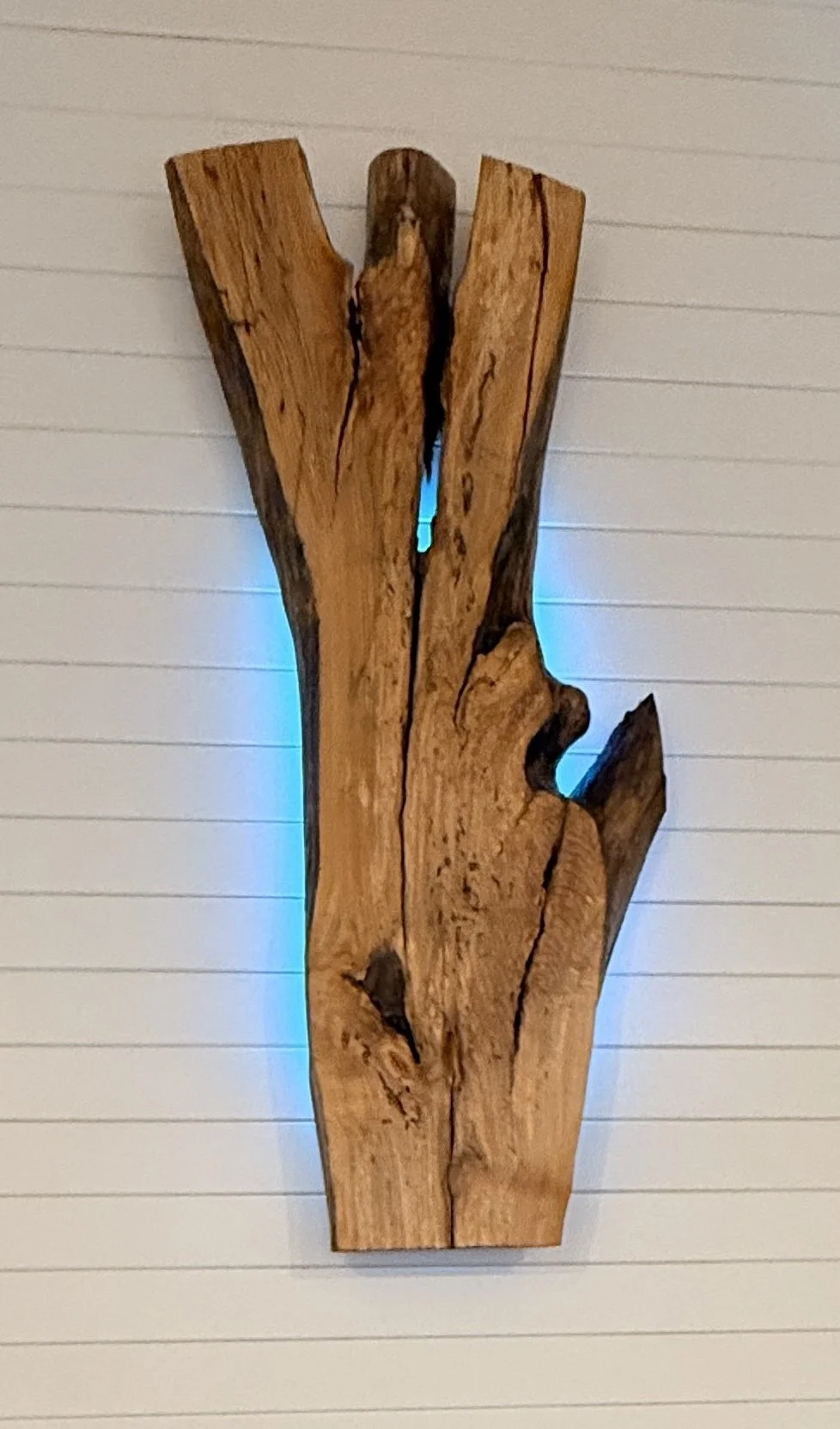
In the loft, a custom maple wall piece Lee made fans outward at the top — a branching form that echoes limbs and roots without being literal about it. Backlit with soft blue light, the negative space between its forms keeps the room feeling open. A focal point that doesn't demand anything of you.
Light: The Final Material
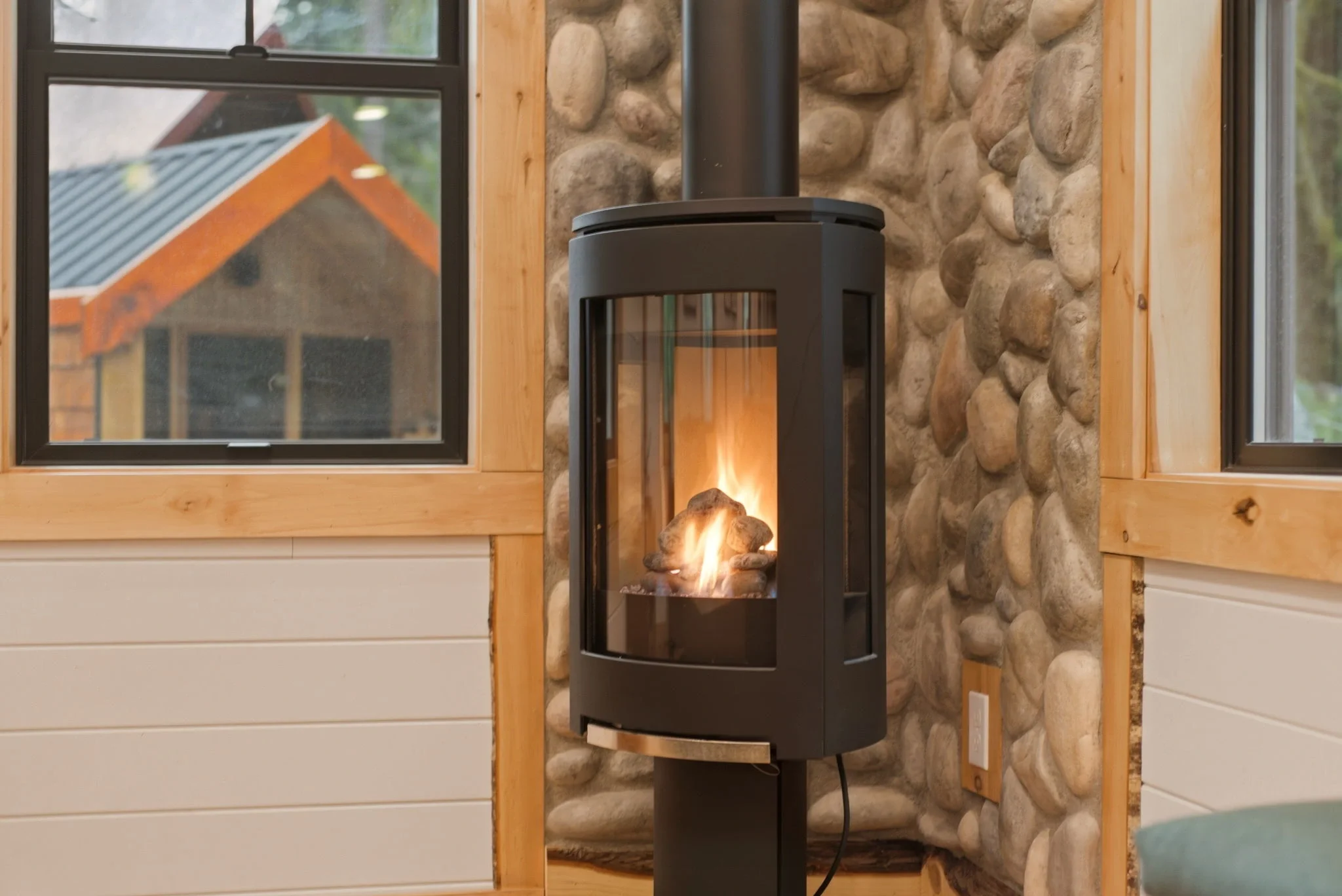
Morning light at Fjellsangin comes in cool and blue. Afternoon turns the quartzite warm and the alder amber. By evening, the whole interior shifts into a golden register — the Jøtul throwing low light, the sauna warm behind its glass. The windows and finishes were chosen for this.
Design That Feels Alive
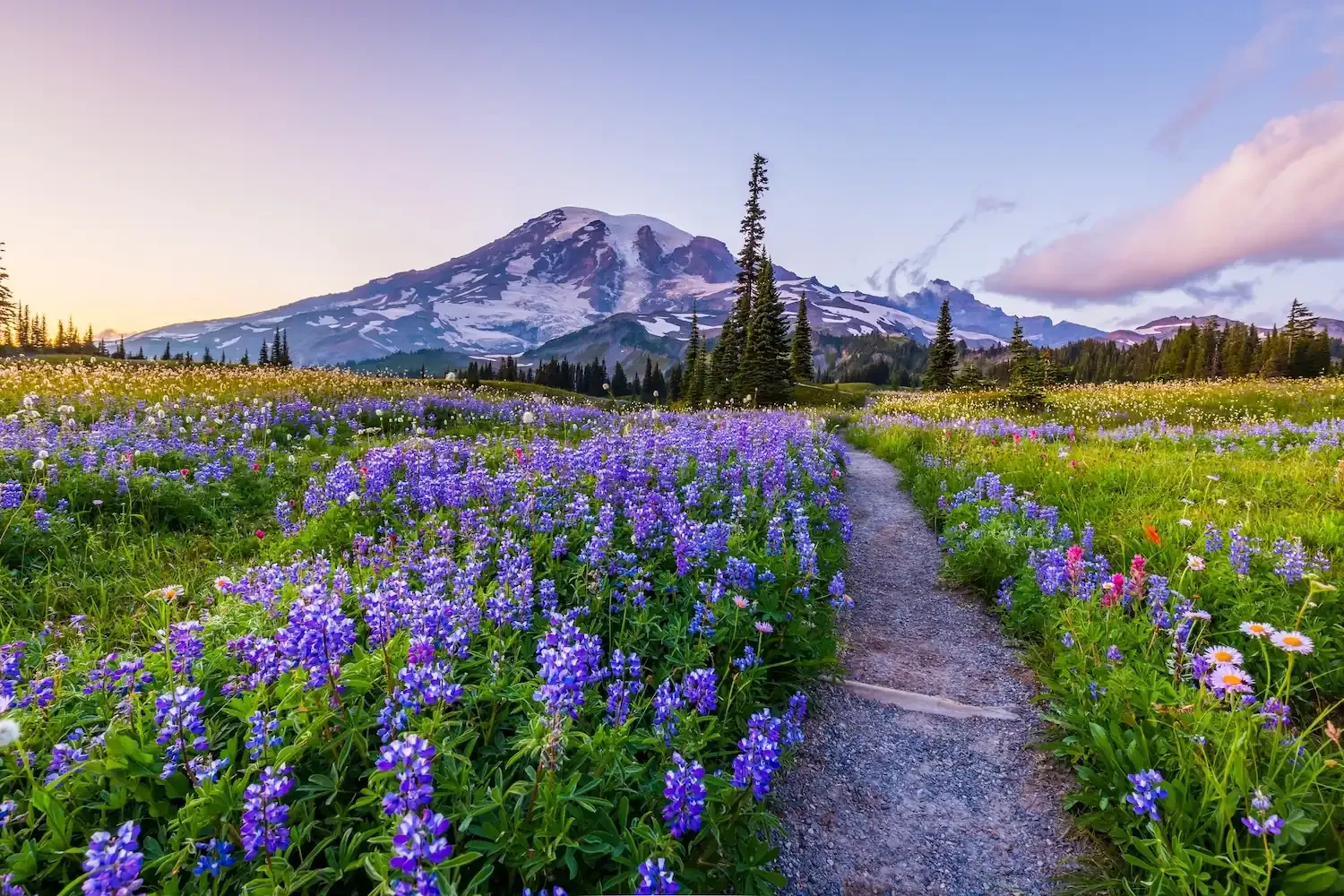
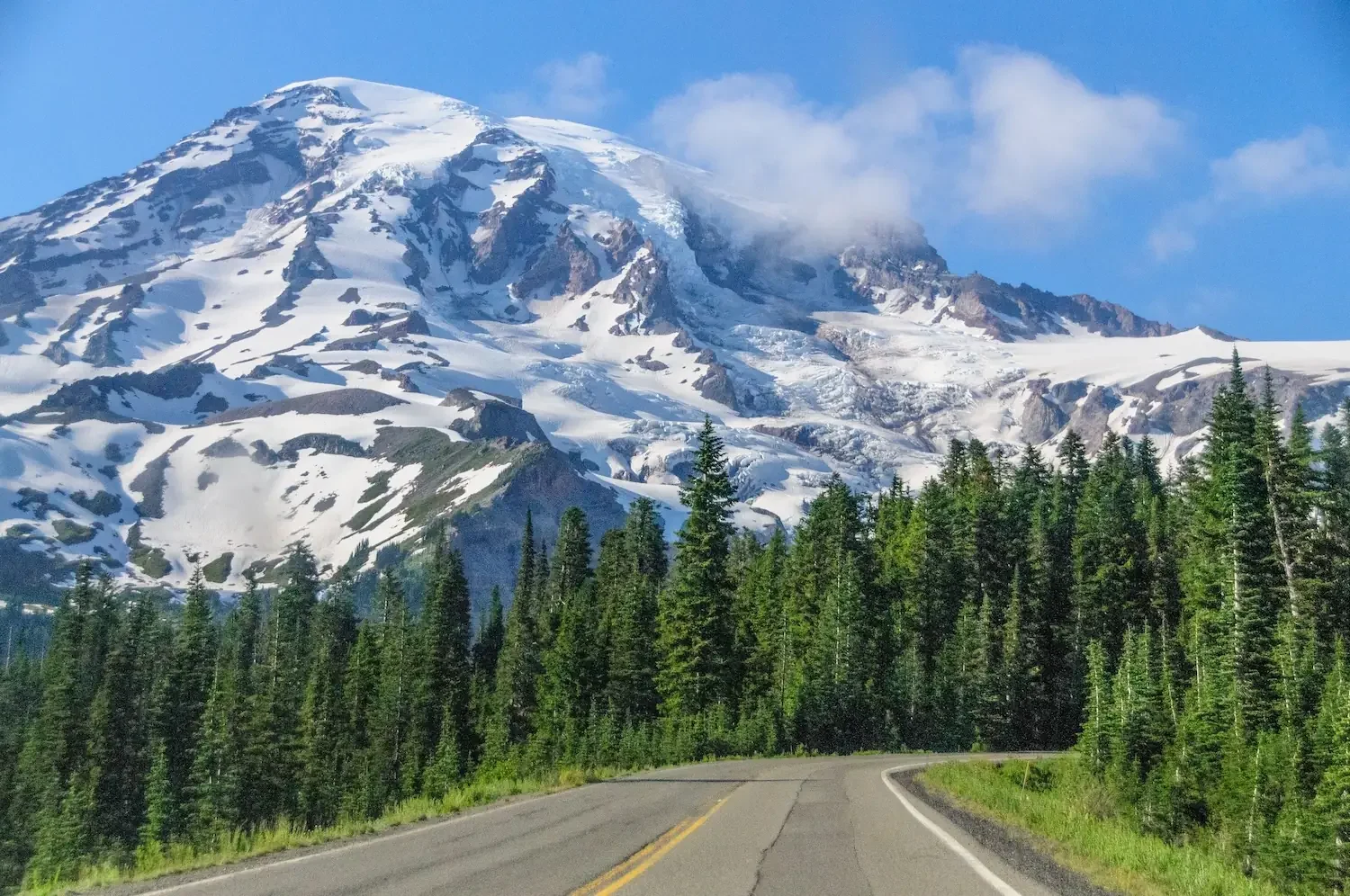
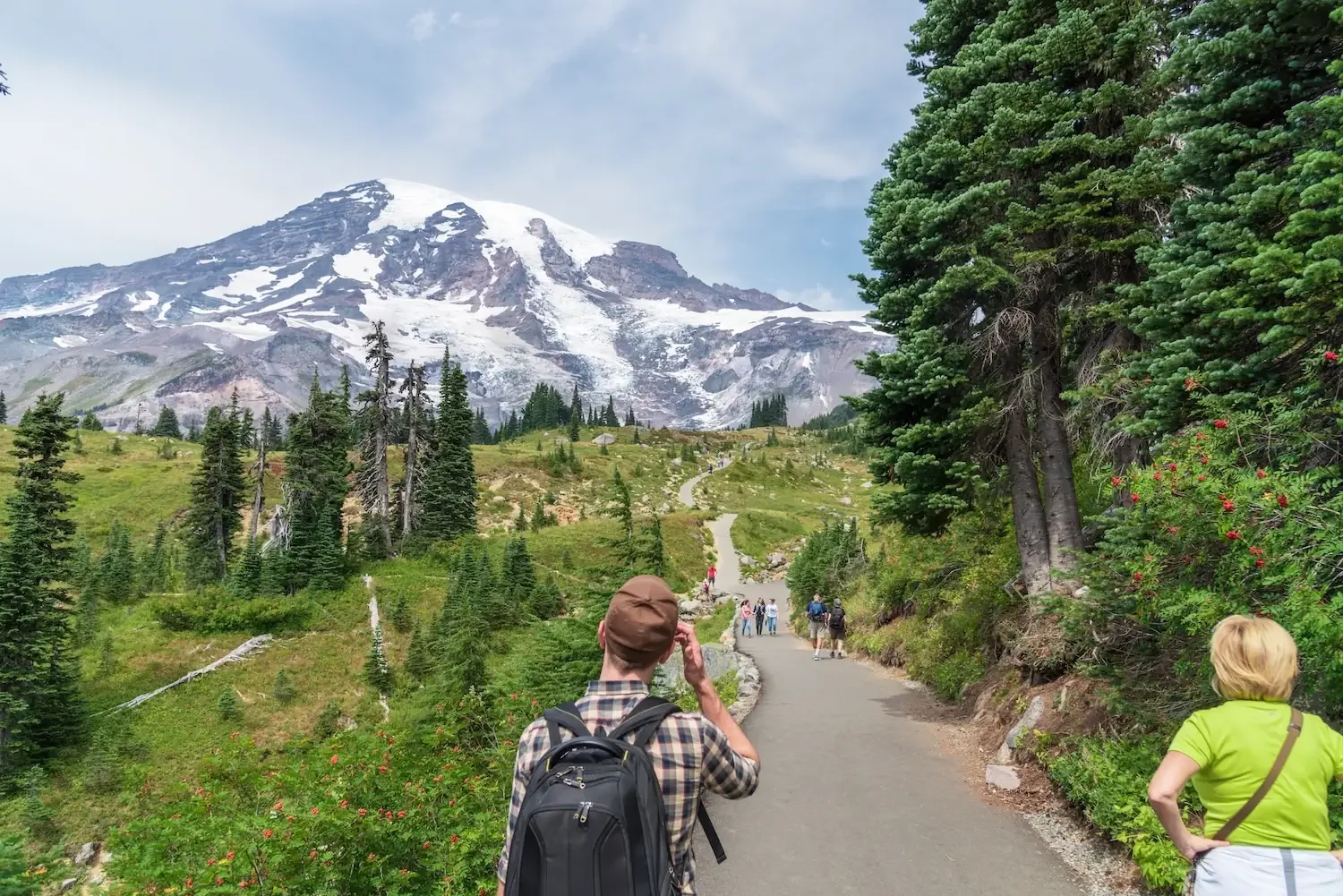
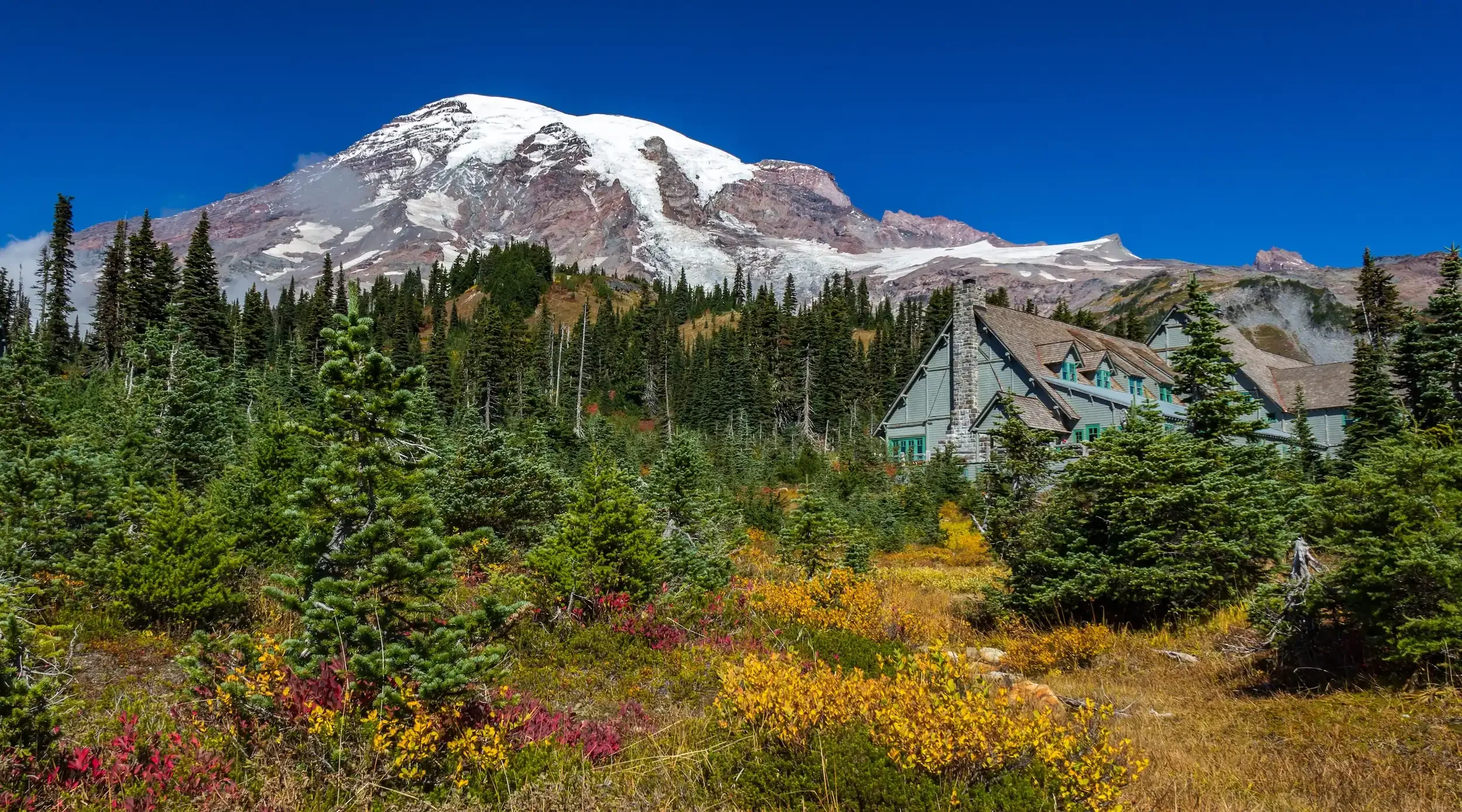
No material at Fjellsangin was selected to impress. The live-edge wood, the quartzite, the handknit throws, the way light moves across the floor — all of it points in the same direction. Outside. The mountain is the point. The cabin just makes it easier to pay attention to it.