The Best Hikes on the Nisqually Side of Mt. Rainier — From Easy Walks to All-Day Climbs
What Are the Best Hikes on the Nisqually Side of Mt. Rainier?
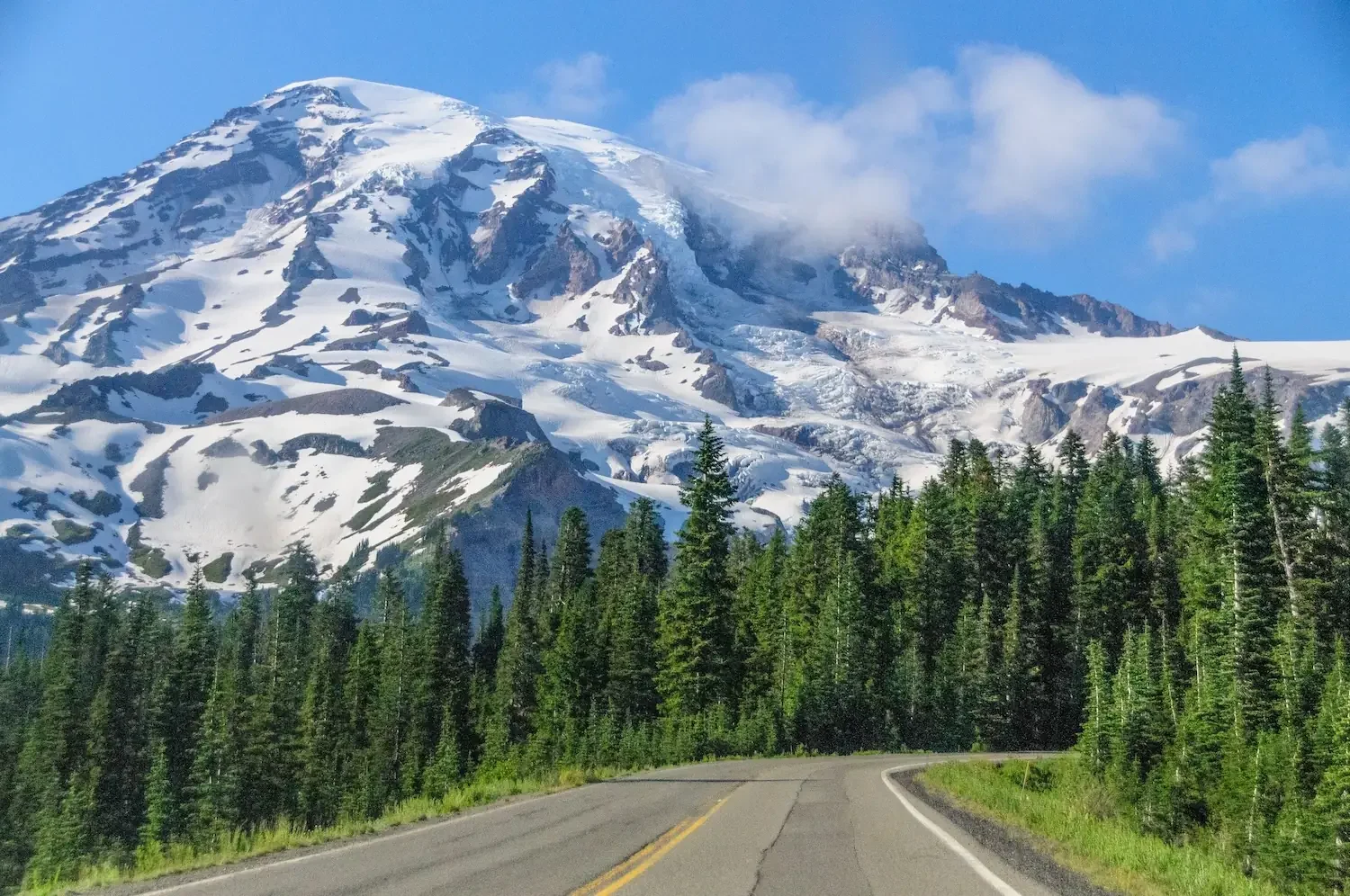
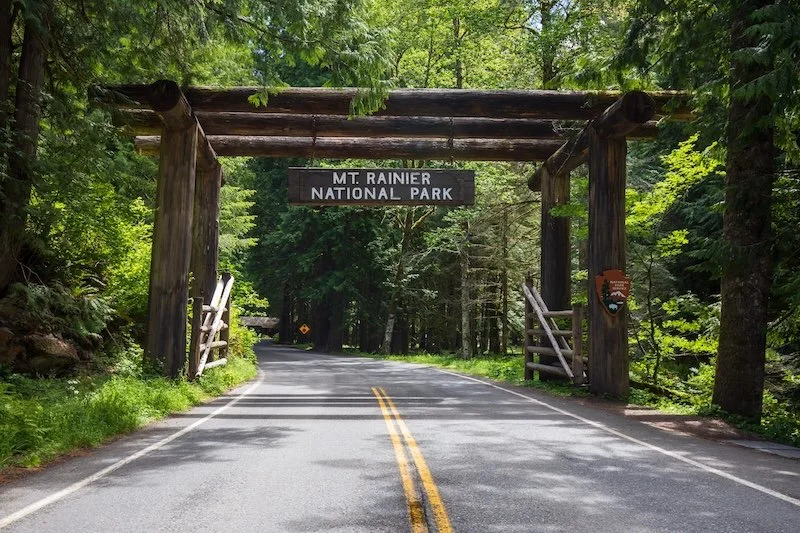
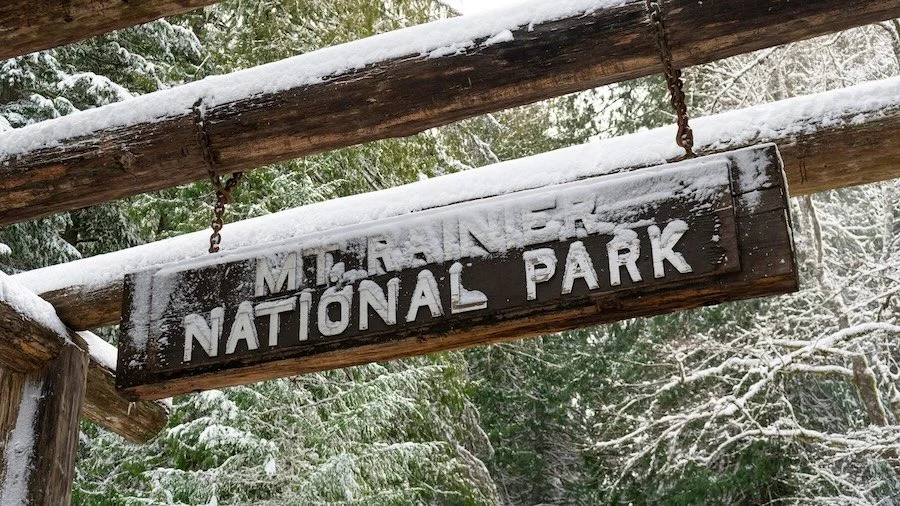
Mount Rainier National Park holds some of the most accessible, most rewarding hiking in the park. Not just in Washington — in the Pacific Northwest, full stop.
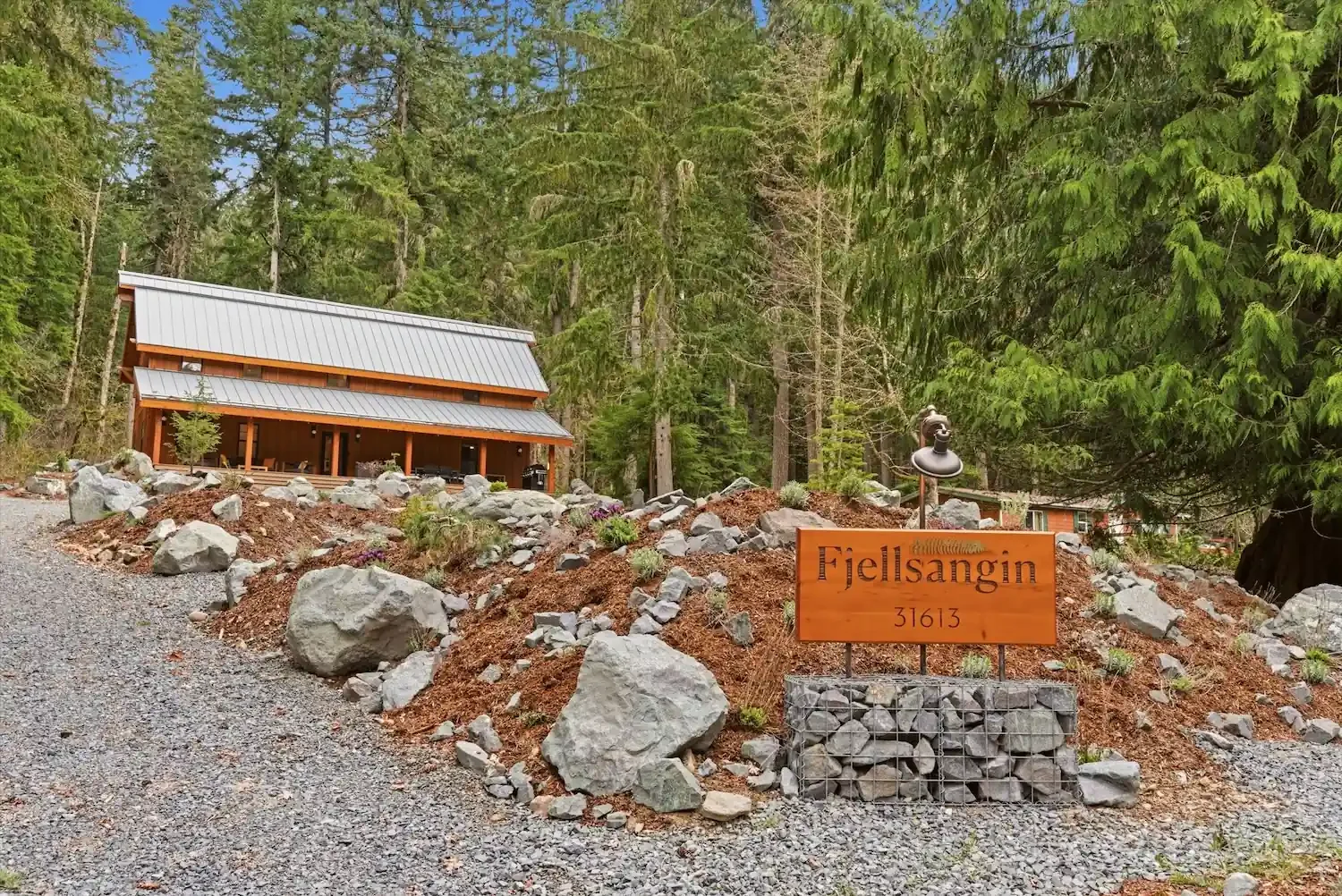
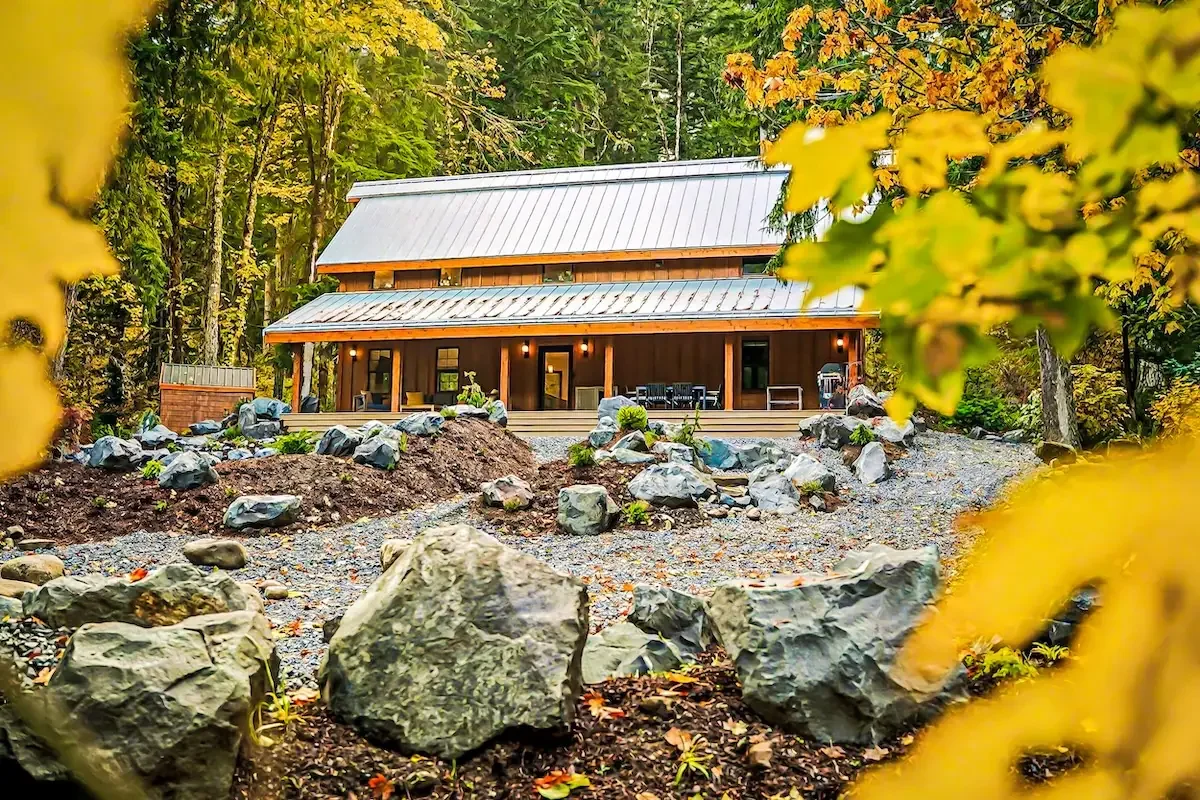
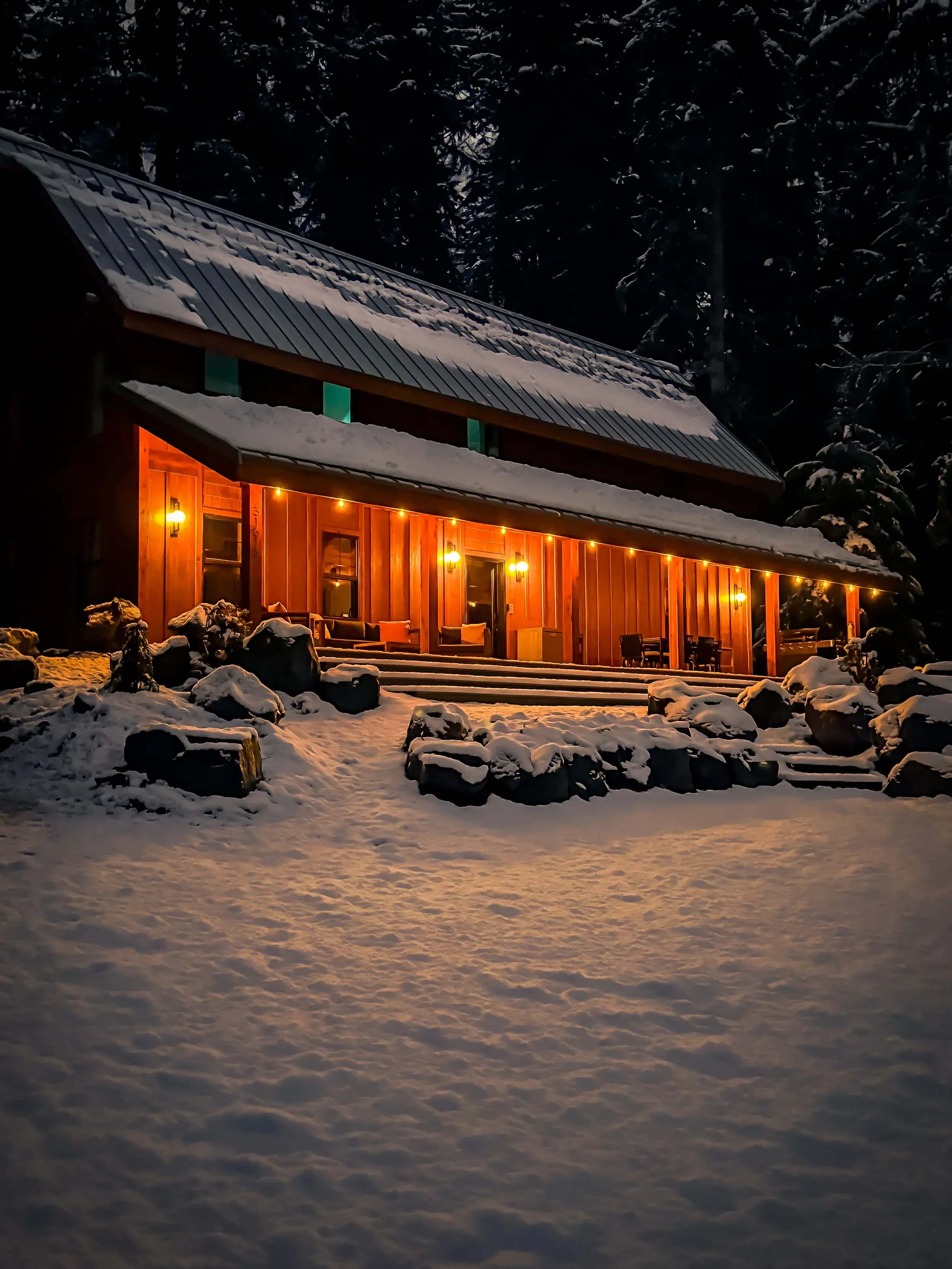
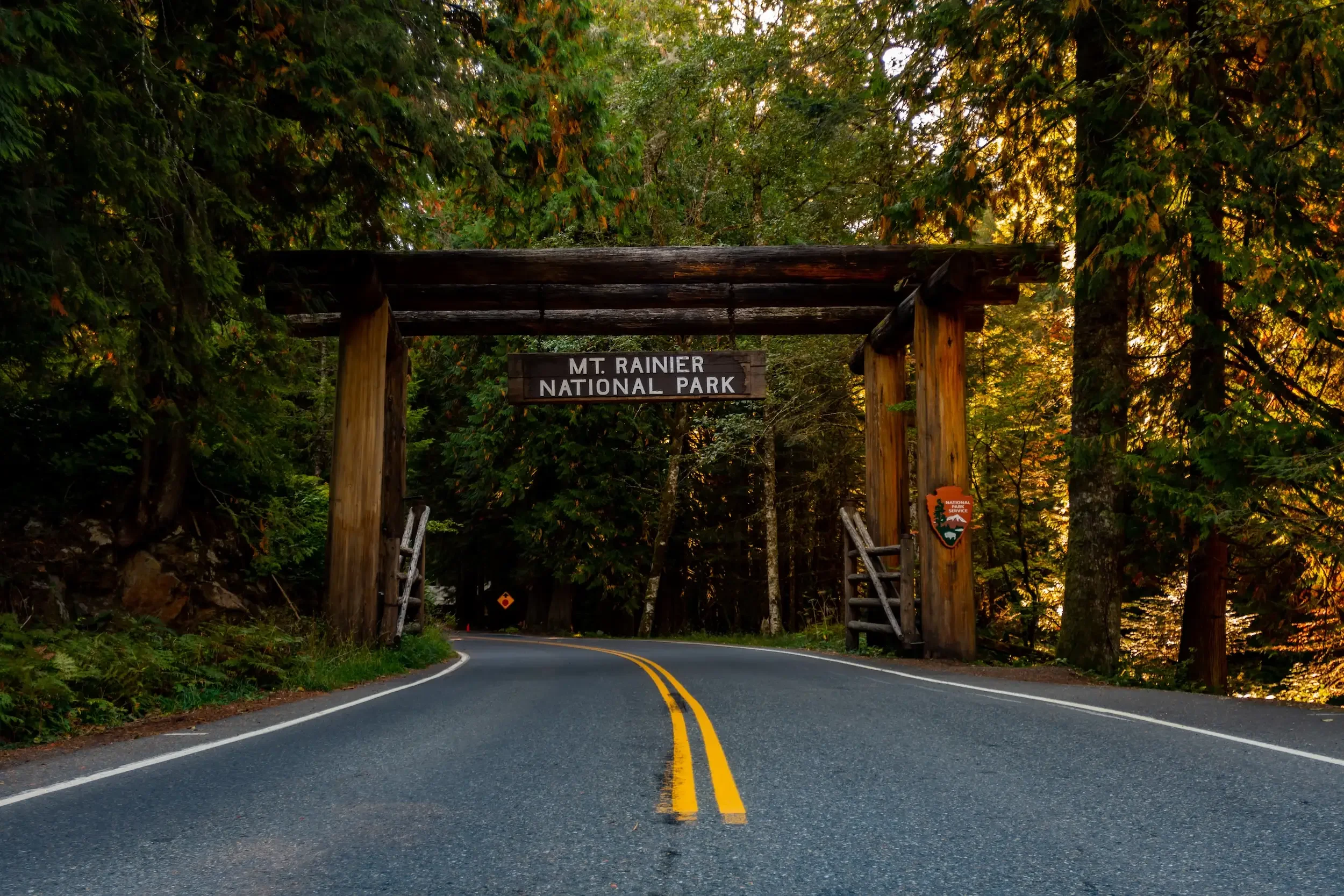
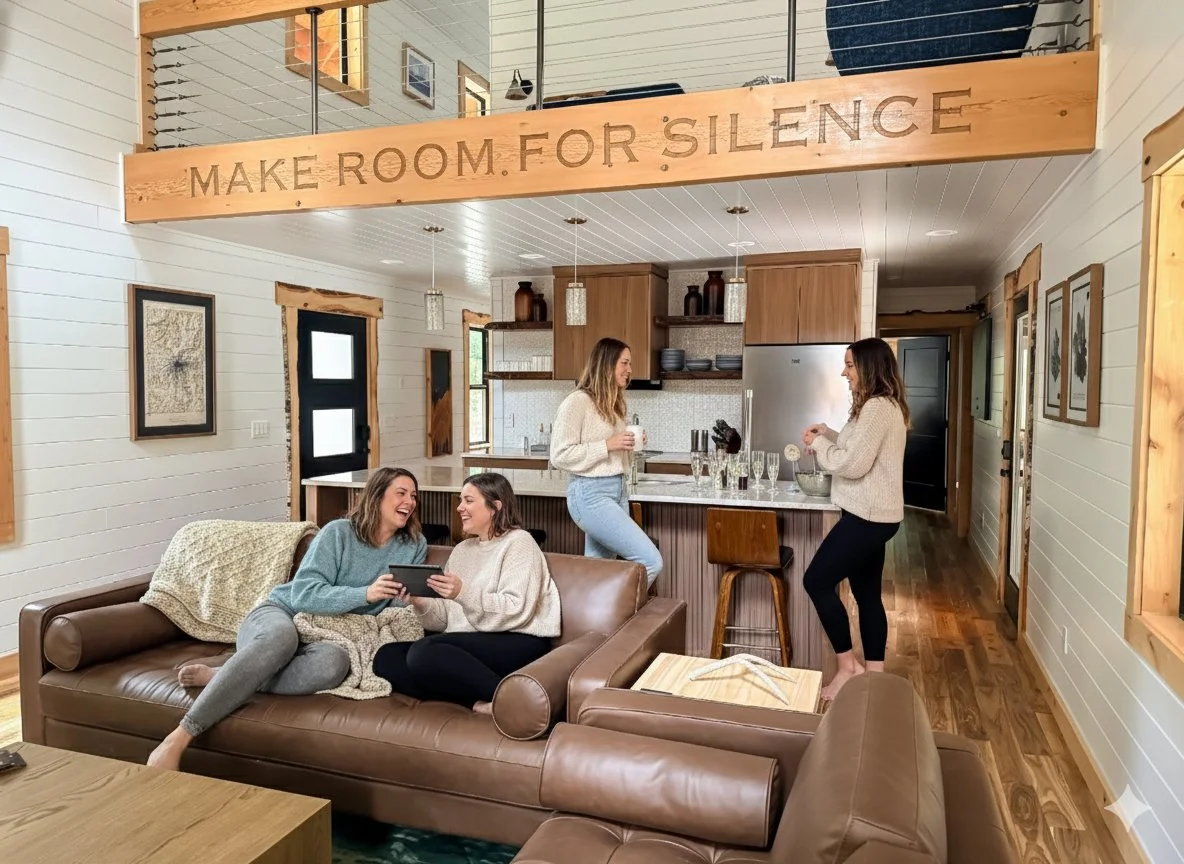
For guests staying at Fjellsangin, the advantage is proximity. Trailheads are close. Conditions are easy to check before you leave the cabin. And the park is close enough that a half-day hike leaves time for a real afternoon — sauna, a long meal, a slow evening. You’re not commuting to the mountain. You’re already there.
Here are the trails worth building a day around, organized by difficulty and the experience they deliver.
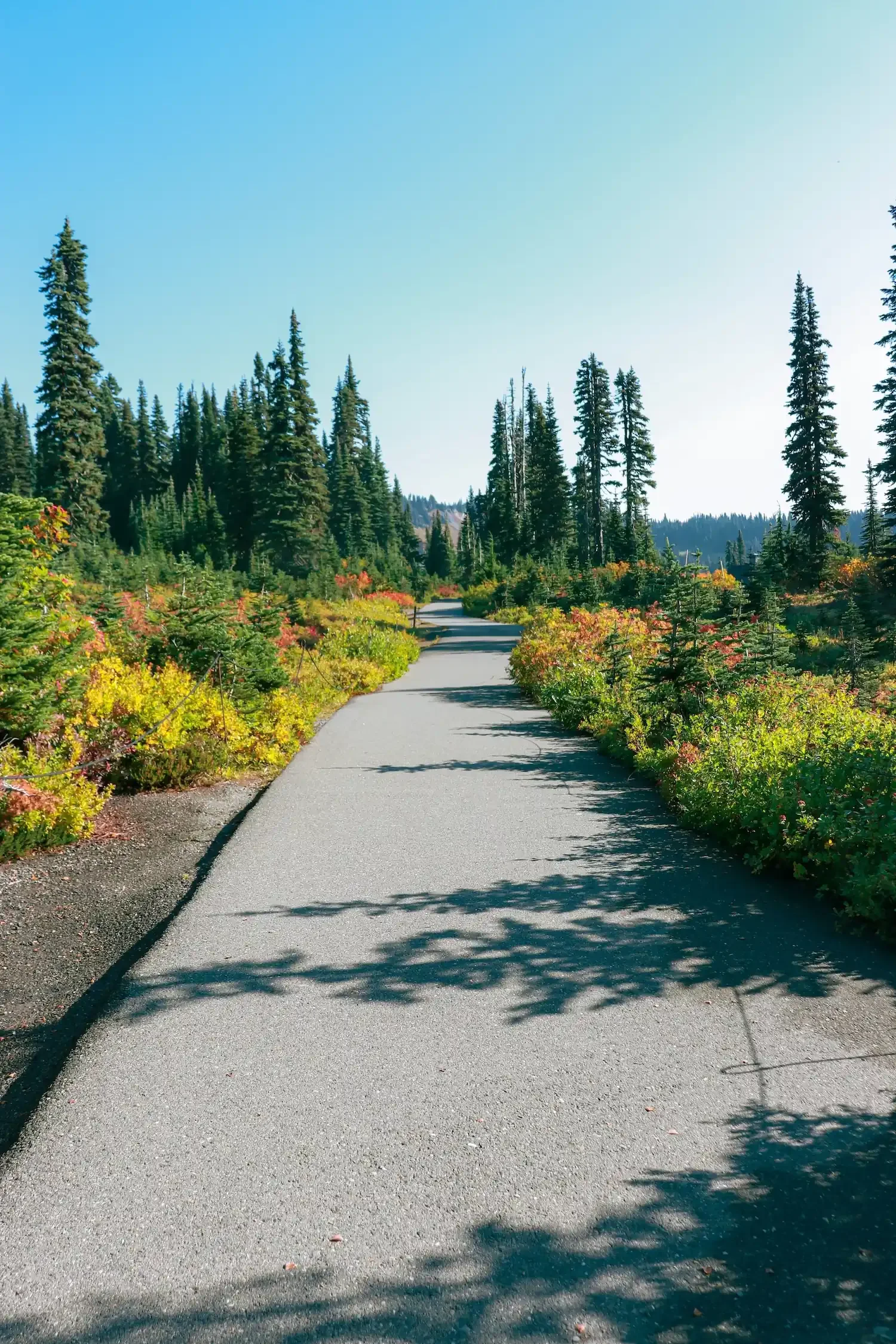
Nisqually Vista Loop - Best for a Quick Summit View
Distance: 1.2 miles round trip. Elevation gain: roughly 200 feet. An arrival-day hike, or a recovery-day hike, or a hike for the morning you want to be outside but don’t need the mountain to demand anything of you.
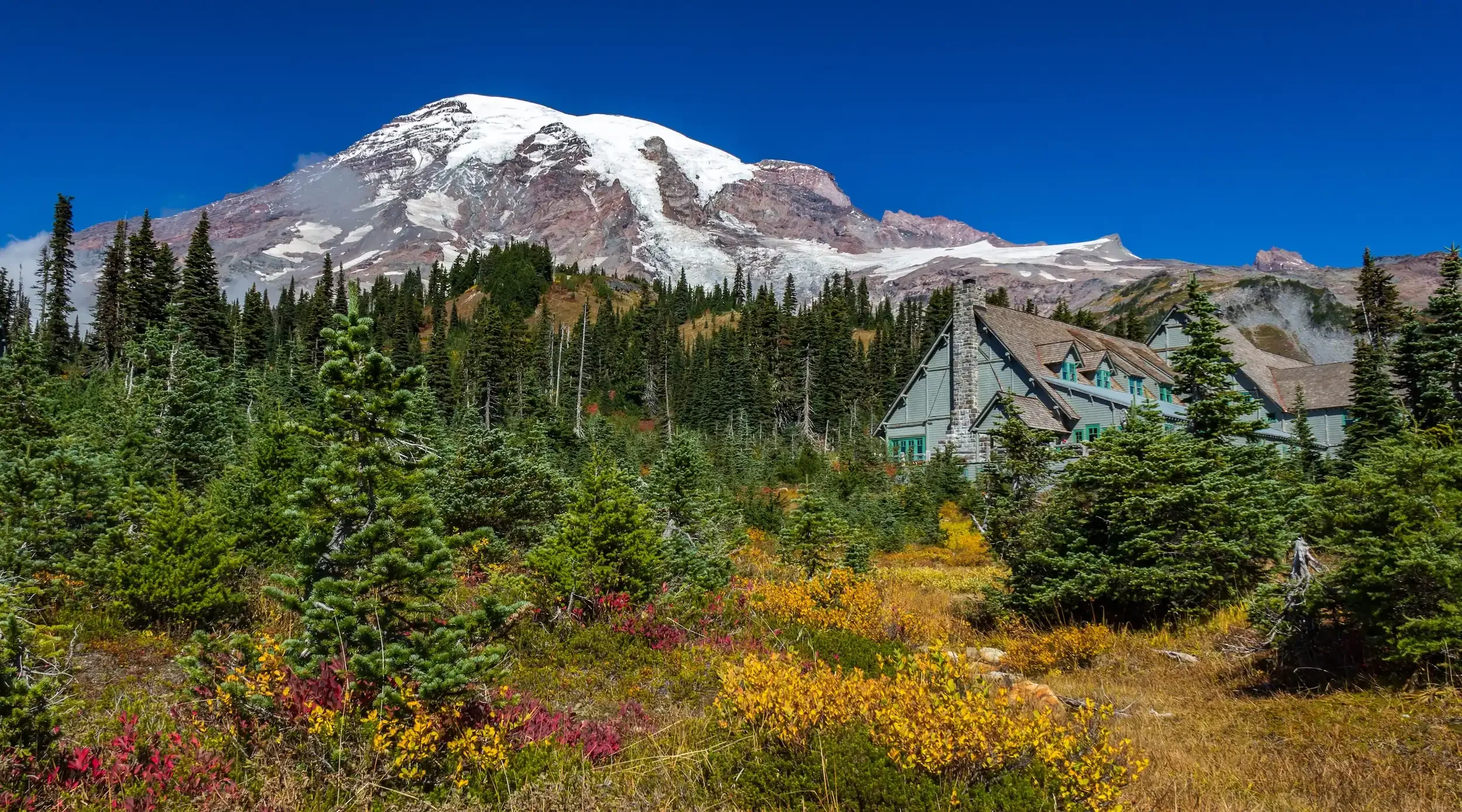
The loop moves through the forest before opening to meadow views of the Nisqually Glacier — on clear days, the summit appears above the treeline with a scale that takes a moment to process. Benches are spaced along the route. Nobody is in a rush on this trail. That’s partly why it works so well as a first outing, when you’re still learning to move at the mountain’s pace rather than your own.
Pairs well with a slower afternoon back at the cabin — a rhythm we recommend in our guide for first-time Rainier visitors.
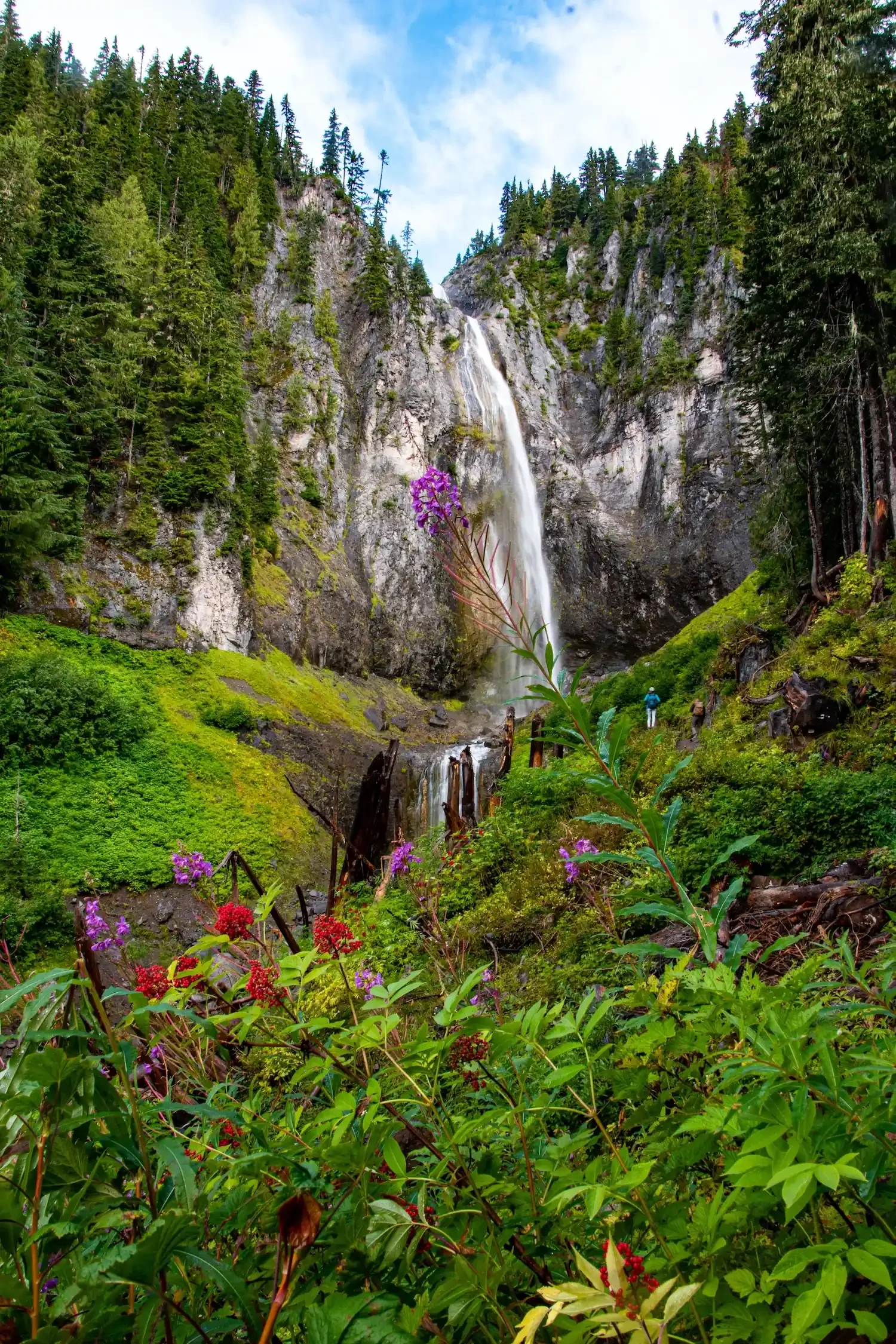
Comet Falls Trail - Best for Waterfall Seekers
Distance: 3.8 miles round trip. Elevation gain: 900 feet. One of the most dramatic waterfall hikes in the park, and an honest half-day.
A steady forest climb leads to a cascade plunging down a steep cliff face — especially powerful in early summer or after heavy rain, when the volume of water turns it into something almost loud enough to feel. The forest on the approach has the deep quiet of the trees, the kind of silence with texture. You hear the falls before you see them.
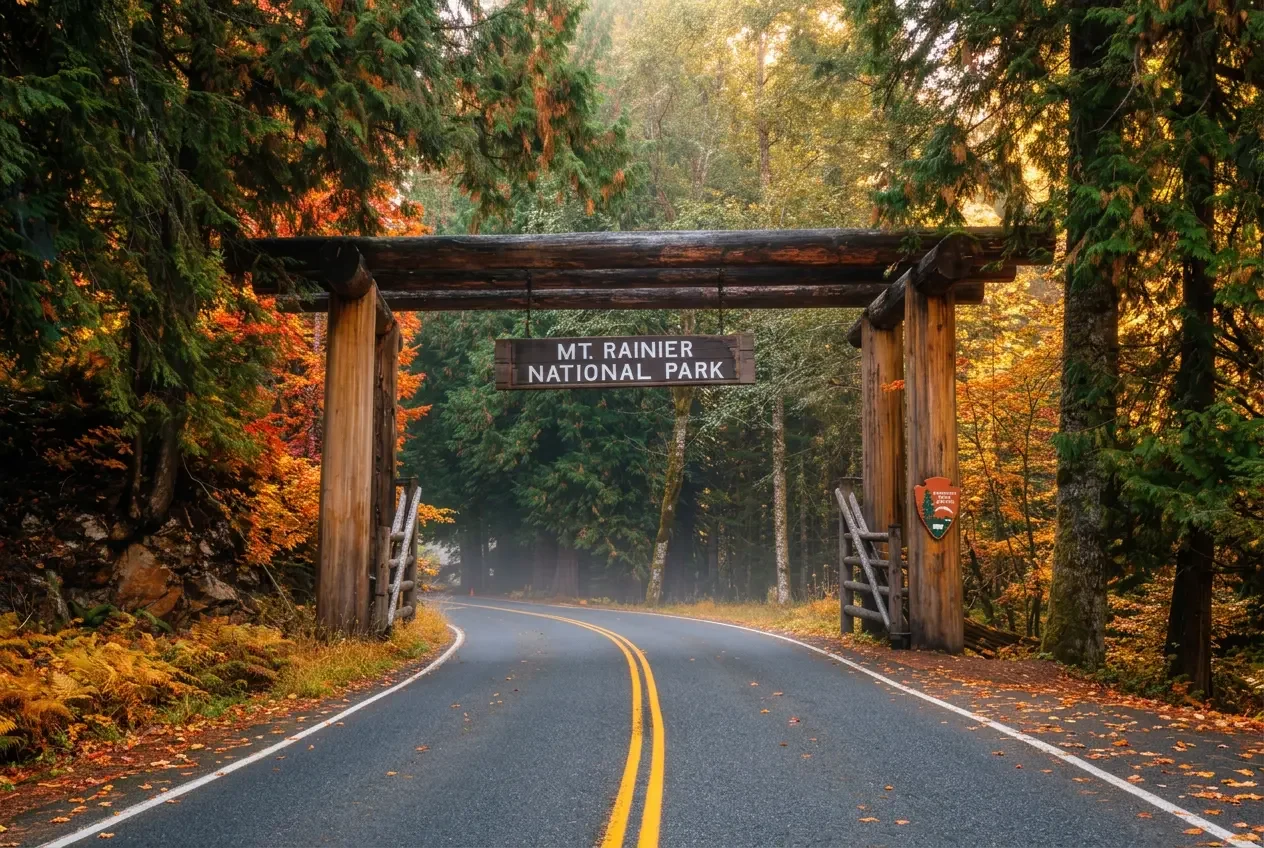
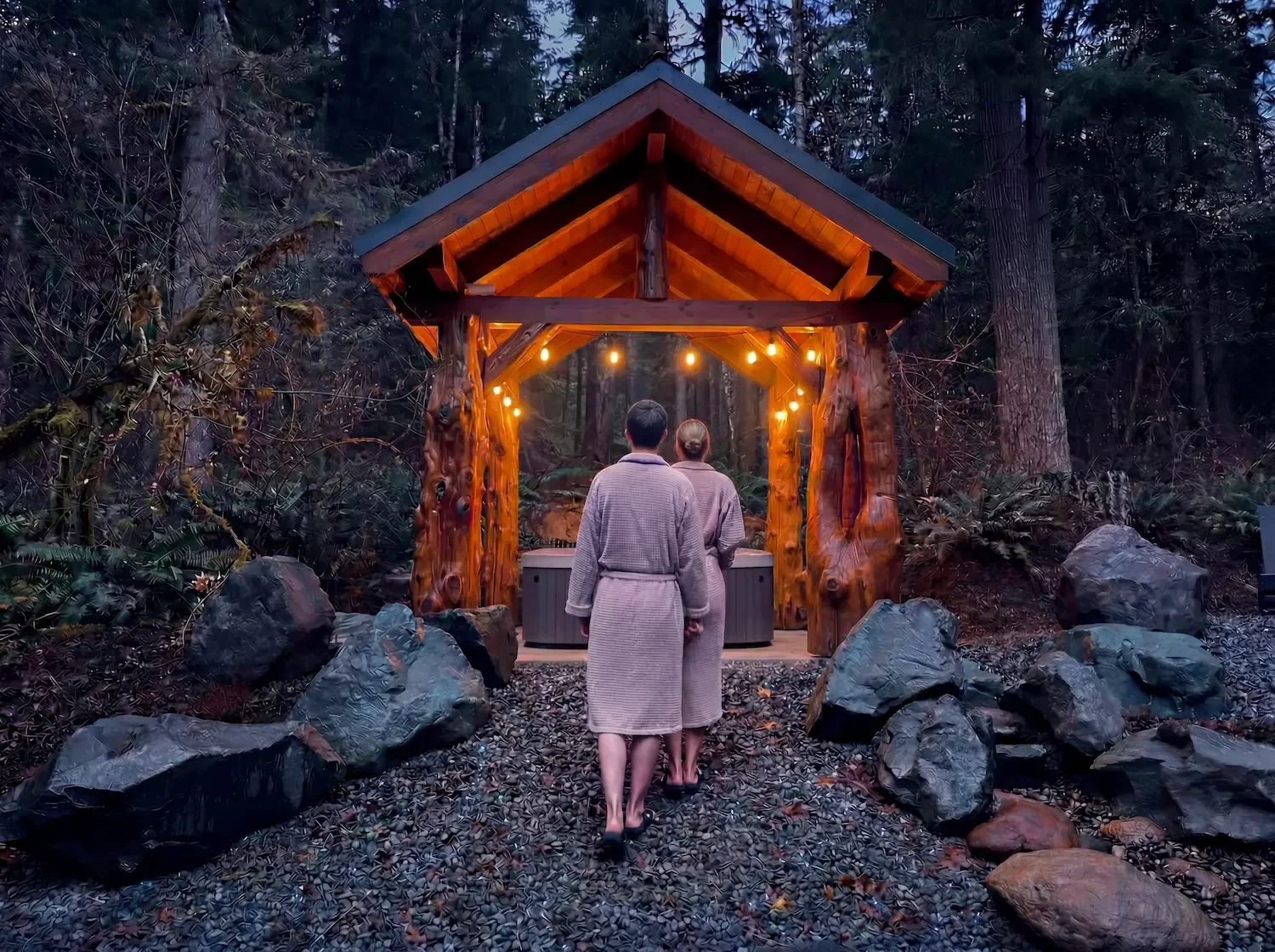
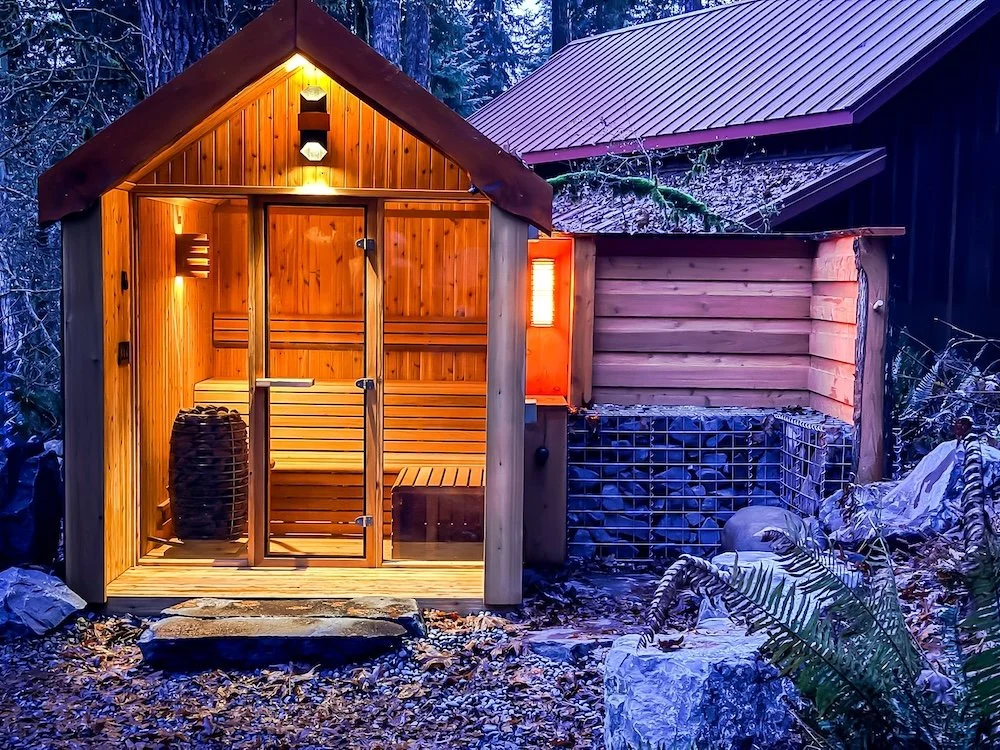
Because this trail is accessed via the Nisqually Entrance, the return to Fjellsangin is straightforward. Come back, get in the cedar-lined sauna, let the legs recover. That arc — effort, then heat, then rest — is the best way to end a hiking day.
Always check current park road and trail conditions before heading out, especially in shoulder seasons when the road toward Comet Falls can be affected by runoff.
Standing at the base of the falls and looking up left me with a sense of awe the first time I saw them.
Rampart Ridge Loop - Best for Solitude
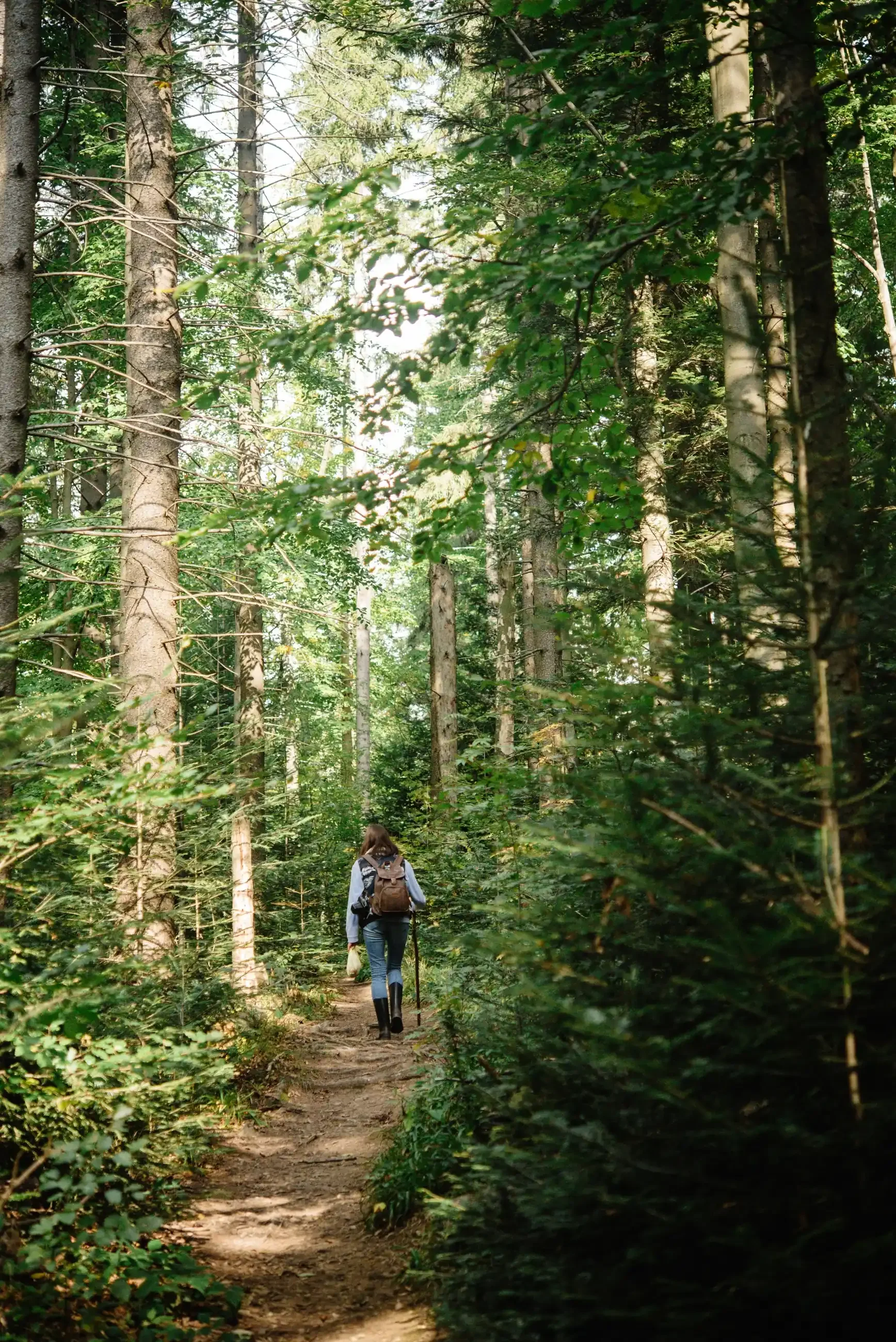
The roughly 4.6-mile Rampart Ridge loop gains about 1,300 feet through shaded forest, with occasional glimpses of Rainier through the canopy and passages through historically significant terrain near Longmire. This is a solitude trail. You hear your own footsteps, the wind, and not much else.
The forested character means it's often hikeable earlier in the season than the higher alpine routes. Guests who plan to use the sauna on the way back tend to choose Rampart Ridge.
Skyline Trail - Best for the Full Alpine Experience
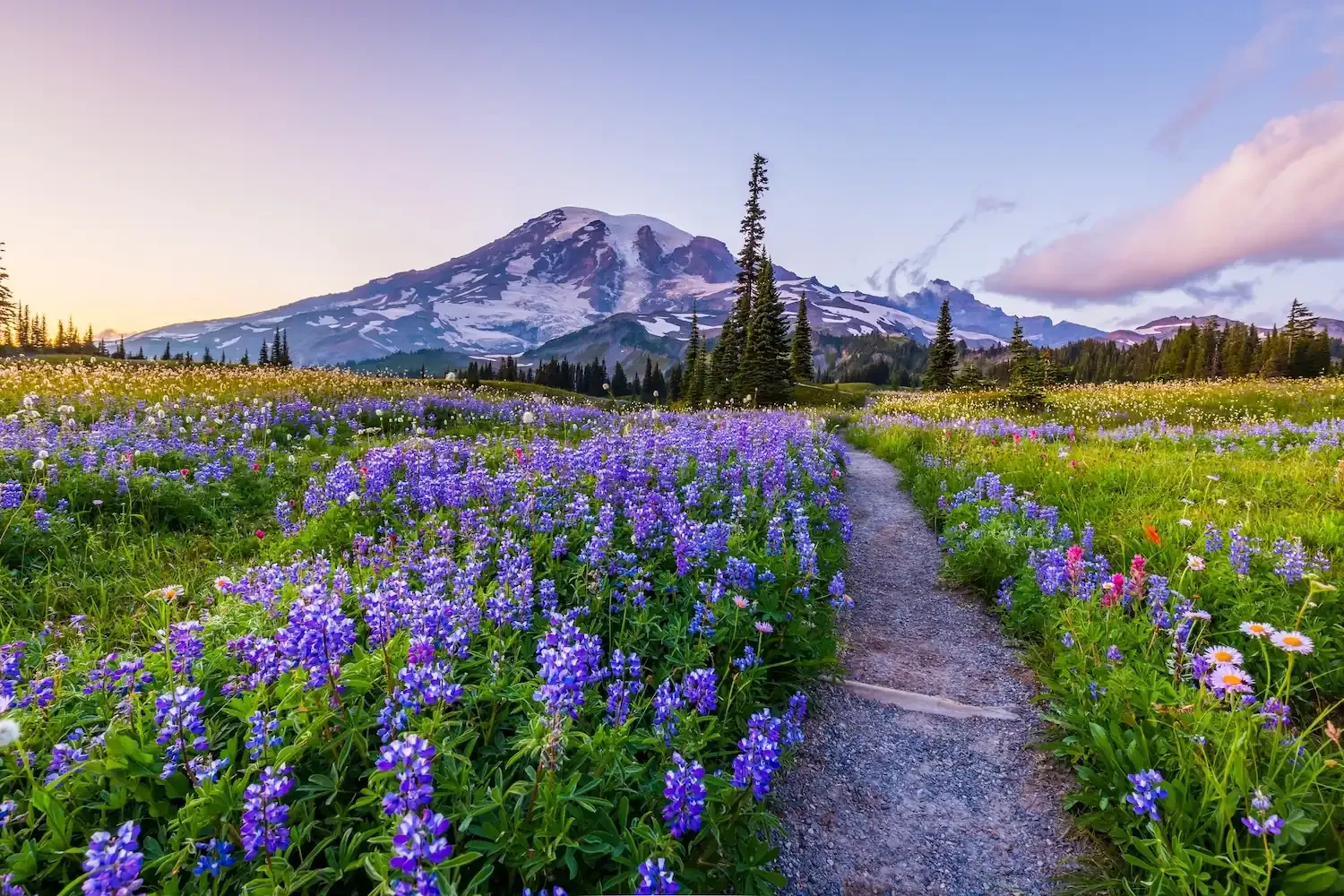
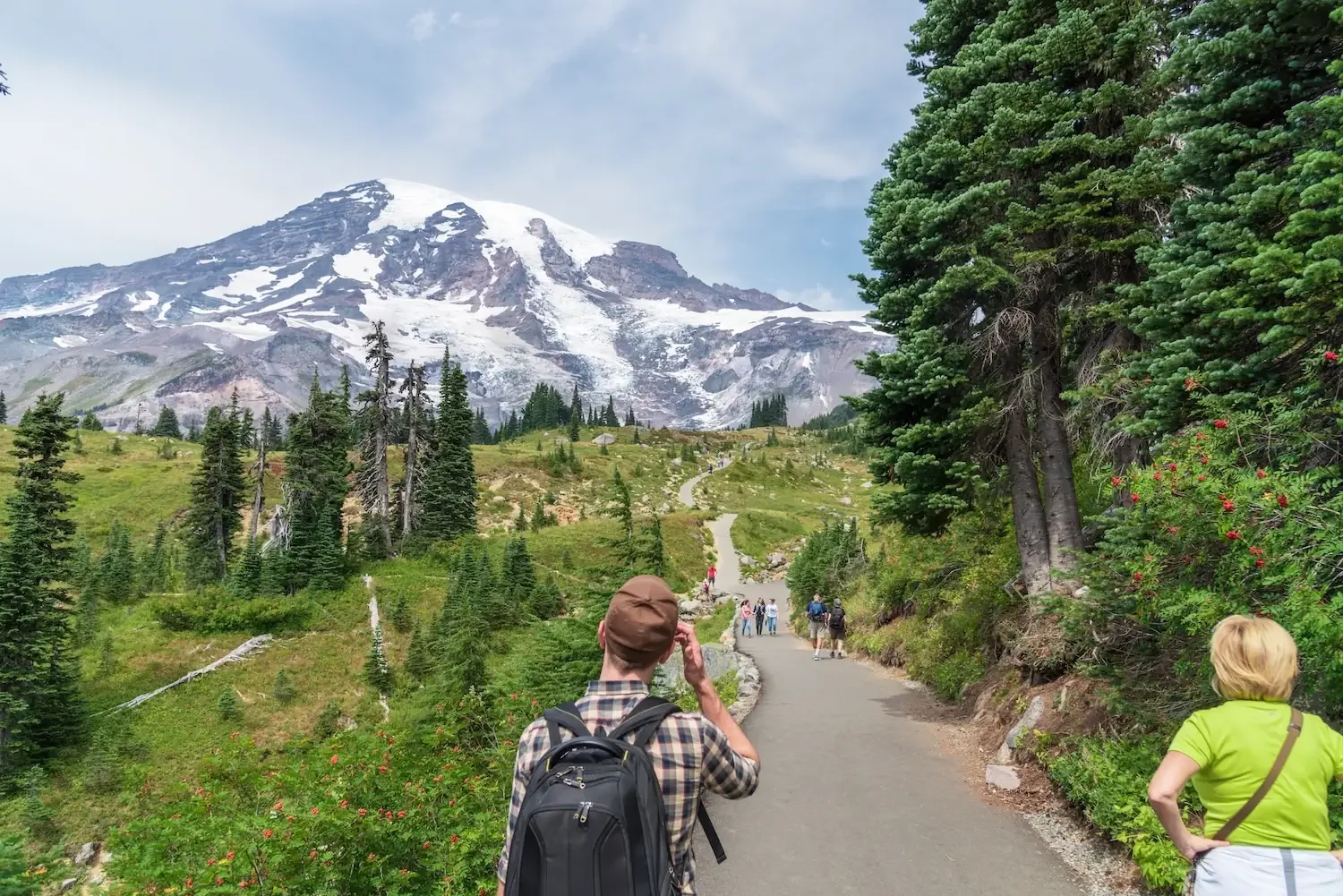
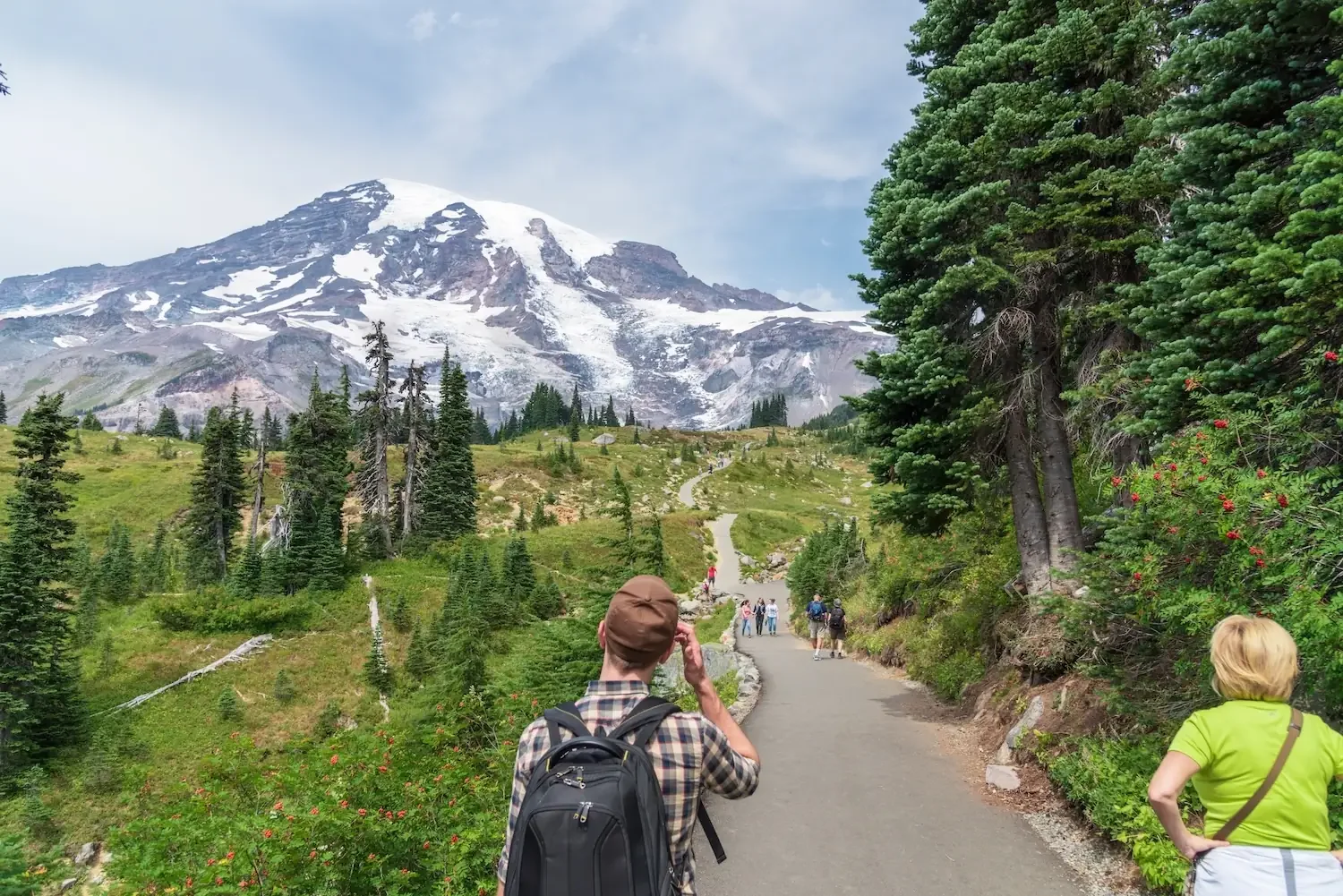
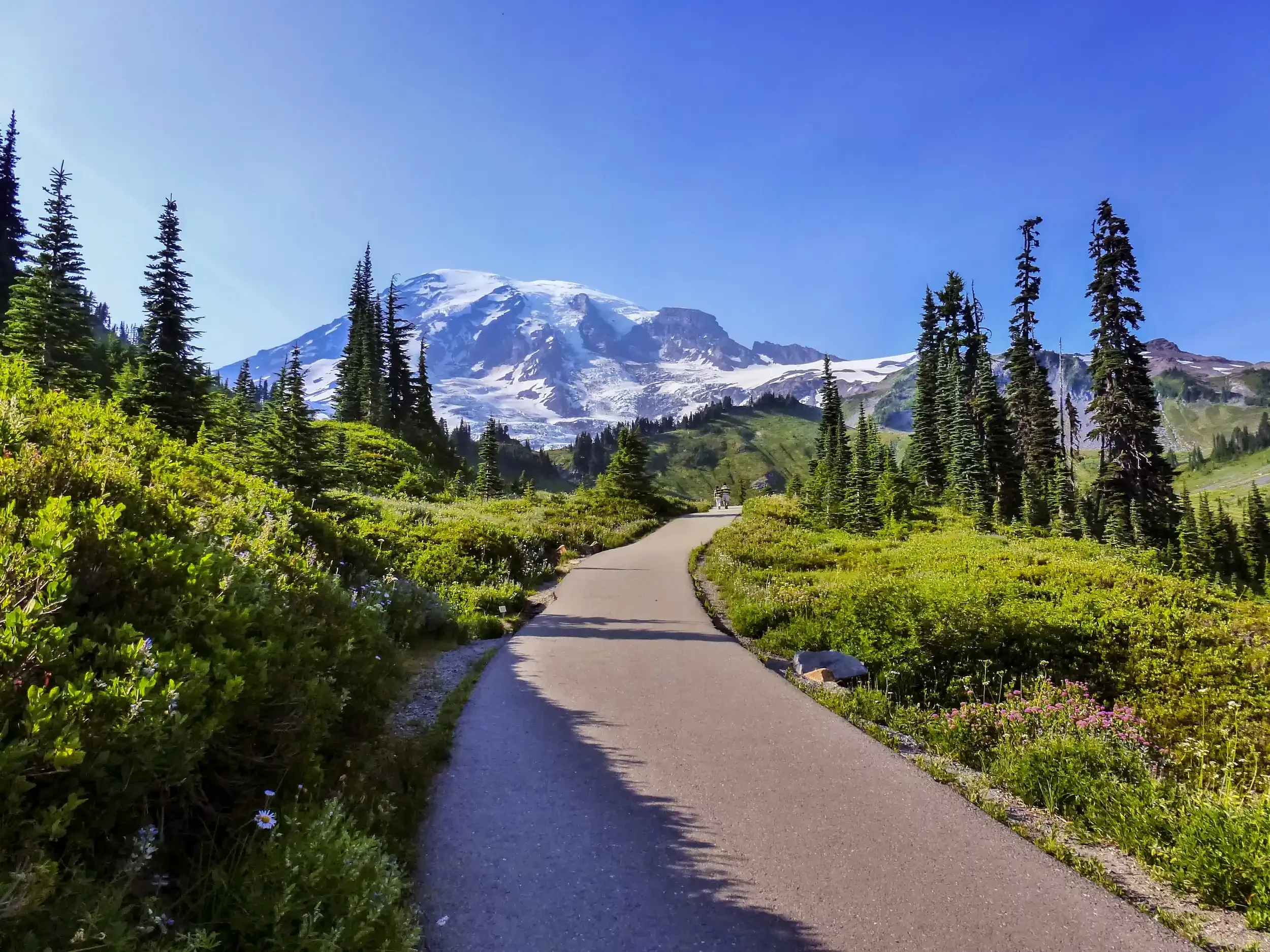
The Skyline Trail is the signature hike on this side of the mountain. Five and a half miles, 1,700 feet of elevation gain, accessed from Paradise. It puts you above treeline in wildflower meadows in summer and snowfields that linger into July. On a clear day at Panorama Point, you have glaciers above you and the Nisqually Valley below.
Conditions change fast at this elevation. Build in extra time, carry layers, and check the NPS conditions page the morning you go. Plan this as a dedicated outing, not one stop in a busier day.
During the summer, Lee does this once a week. And he runs it!
Trail of the Shadows - Best Short Walk in the Park
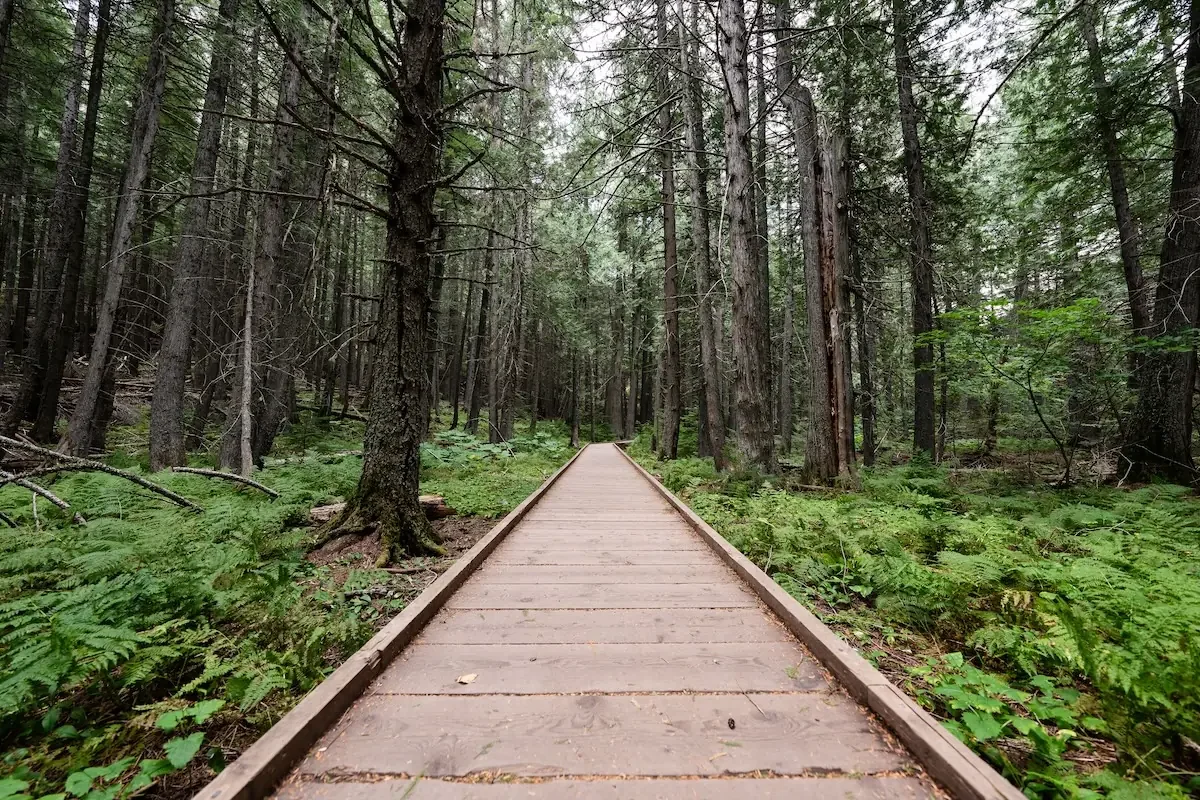
Three-quarters of a mile. Flat. Interpretive markers. Geothermal springs steaming against cool air. Trees so large you have to stop and look up. The Trail of the Shadows near Longmire rewards attention rather than ambition. It's the hike you choose on a foggy morning or a quiet evening before returning to the cabin.
The mineral springs have their own smell: sulfur and something mineral and ancient. Worth stopping at. Also, the most reliably accessible trail in winter.
How Do You Plan Your Hiking Day on the Nisqually Side?
The approach that works best: one primary hike per day, a backup option in case of weather, and time set aside for return and recovery. Trail in the morning. Sauna in the afternoon. Dinner at the cabin in the evening. This is what we explore in the Guide for First-Time Mt. Rainier Visitors: the mountain rewards flexibility more than ambition.